Category Archives: Writing

Writing Tricked Me!

Have you ever started a story only to find several hundred words in that it has nothing to do with what you thought you were going to write?

While surfing the internet, I came across an interview with Amy Tan, (I’ve attached the video to this post) where she discusses, among other things, the notion that through writing we discover things we otherwise could not express.

I’d agree with Ms. Tan that the craft of writing has a way of tricking you into thinking about things you hadn’t thought about before and that very often we are driven to write a story during periods of great change. In fact, it’s the change that forces questions to the top and that pushes the story to be told.

The catalysis, the change that inspired me to begin my novel was the death of a dear friend, who after years of battling leukemia, received a bone marrow transplant, only to have her body reject the donor marrow and eventually to lose her battle in September ‘03. I thought I wanted to write a story that would bring attention to the need for bone marrow donors and to reflect the courage I saw in my friend. Heidi was an only child with an uncommon pedigree (her parents are German and South African) and without a match in either extended family, she had to rely on a stranger donation. That’s what I thought I wanted to write.

You tricky trickster Ms. Writing!

As it turns out, what I really wanted to write was about a family with several siblings (not an only child) as they came to grips with the life-threatening illness of one of their own, and to watch how they pulled together (or not), pushing aside old hurts (or not) to support each other.

70,000 words in, I’ve discovered I’m writing a story about the relationship between parents and their children, and between siblings. I’m also exploring how easily we misunderstand the people closest to us, and how the people we’ve spent our entire lives with, the people who should know us better than anyone else, are often the people who don’t see us (the real us) at all.

Where did that come from?

As I’ve said in an earlier blog, my fictional family is not my real family, but as I write I do recognize themes present in the Sargent/Murchison/McRobb/Overend clans. Being the only family I know from the inside out, I guess it stands to reason issues (oh we have issues) that my family live with would show up on my laptop screen.

Even more surprising to me as I dig deeper into my characters, is how my attention has focused on the mother/son relationship. Although the mother/daughter relationship is present in my novel, the primary pairing driving my narrative is between Anne (the matriarch) and Burt (her eldest son).

Didn’t see that coming.

Ms. Tan suggests that we do all in fact have a story in us, a story that only we can tell, a story that reflects our unique way of looking at the world that is different from anyone else’s viewpoint.

So I’m not telling Heidi’s story? Interesting.

Now, I hope I’ve had all the surprises that trickster has up her sleeve so I can actually get this novel finished!

5 Comments

Filed under Writer's blog, Writer's journey, Writing

5 Tips for Self-Editing

Are you staring at your prose, aware it could be better, but with no idea how to fix it? Been there, done that.

My task this past weekend was to line edit the first twenty-five pages of my novel-in-progress and I’ll admit it damn near killed me. Although I had already edited my work for plot and character development (the big picture stuff) and felt the writing was all right, I needed to elevate the chapter from all right to amazing. The time had arrived to get out the magnifying glass and zoom in on the small picture stuff.

Here are five tips for self-editing that I’ve put together (with help from the trillion workshops I’ve attended and the billion internet articles I’ve read).

Personally, I like to give my entire manuscript an individual sweep for each point.

Step To It

Whether your inclination is toward writing long pack-everything-in kind of sentences or trimmed-to-the-bone sentences, my advice to you is mix it up. Remember, too much of a good thing isn’t good for you. Like eating hot chili pepper Doritos everyday isn’t good for you, neither is a steady diet of the same sentence structures.

Your sentence lengths should also match the mood you’re attempting to create. Ask yourself, am I writing a lazy-day-at-the-park scene, or run-the-cops-are-coming scene? Lazy days dictate more drawn out prose while chase scenes need urgency. It seems obvious, right?

Was that really necessary?

Do you want your reader to trust you? Then say what you mean and mean what you say!

Is your protagonist waiting on her tardy husband for several minutes, or forty-five minutes? Knowing the dirty rotten scoundrel has left her standing in the rain for forty-five minutes, has more impact than believing it was more than a few, but less than many minutes.

Don’t feed your reader wishy-washy words like very, really, somewhat, likely, just, quite.

Unnecessary and vague words suck the life out of your prose. Stay away from spineless words that slow the reader down and piss them off. Annoyed readers aren’t going to read your story.

Enough with the Adverbs and Adjectives already!

My personal pet peeve!

Adverbs and adjectives are like nice people, but not people you want sitting at your kitchen table morning, noon and night.

As a rule, adverbs prop up weak verbs and are seldom needed. You can eliminate them by using stronger verbs.

Rick ran quickly from the room.

Rick charged from the room.

Adjectives remind me of my husband who has never trusted a recipe in his life and who feels he has to add this and this and this to the pot. Although I appreciate his creativity, his constant inclusion of Mrs. Dash is unnecessary, and dare I say, distracting.

The bright, yellow, ray of warm light filled the room.

Sunlight filled the room.

Say it Again!

It’s easy to do. You come up with a brilliant word or awe-inspiring phrase, and like a catchy jingle, before you know it’s stuck in your head, repeating over and over again on the page. This is where printing your work and reading it out loud will pop up those accidental brain blips.

Not To Be!

This is a biggy and my personal favourite vise.

Watch out for overuse of the verb “To-Be” (am, is, are, was, were, be, being, been). This weekend when I did a Find search of my twenty-five page chapter, I found eighty-nine, 89, WASs in my prose. Yikes! Time to seek out and destroy!

Overuse of the verb “To-Be” creates a passive sentence structure which in turn creates confusing, awkward, wordy sentences. You want your sentences to be active, not passive. Trust me.

Active voice = the subject performs the action. The grocery cart hit the car.

Passive voice = the subject receives the action. The car was hit by the grocery cart.

Here are three strategies to help you eliminate the “To-Be” verb.

  • Replace the verb with a stronger verb.

That chocolate cake is good. (passive)

That chocolate tastes good. (active)

  • Rearrange the words in your sentence.

The phone was answered by Nicole. (passive)

Nicole answered the phone. (active)

  • Change another word in the sentence into a verb.

Mike was the creator of the music. (passive)

Mike created the music. (active)

Whatever form your writing takes, I hope these simple principles help you better navigate the scary waters of self-editing.

5 Comments

Filed under Writer's blog, Writer's journey, Writing

It Takes a Village to Raise a Writer

Cottage Office

Last fall, I thought I should quit being a writer. It wasn’t that I didn’t want to write anymore, it was that I thought I couldn’t write well enough. I worried I was like the American Idol contestant who thought they were the next Celine only to be told they were delusional and shouldn’t quit their day job.

Trouble was, I had quit my day job.

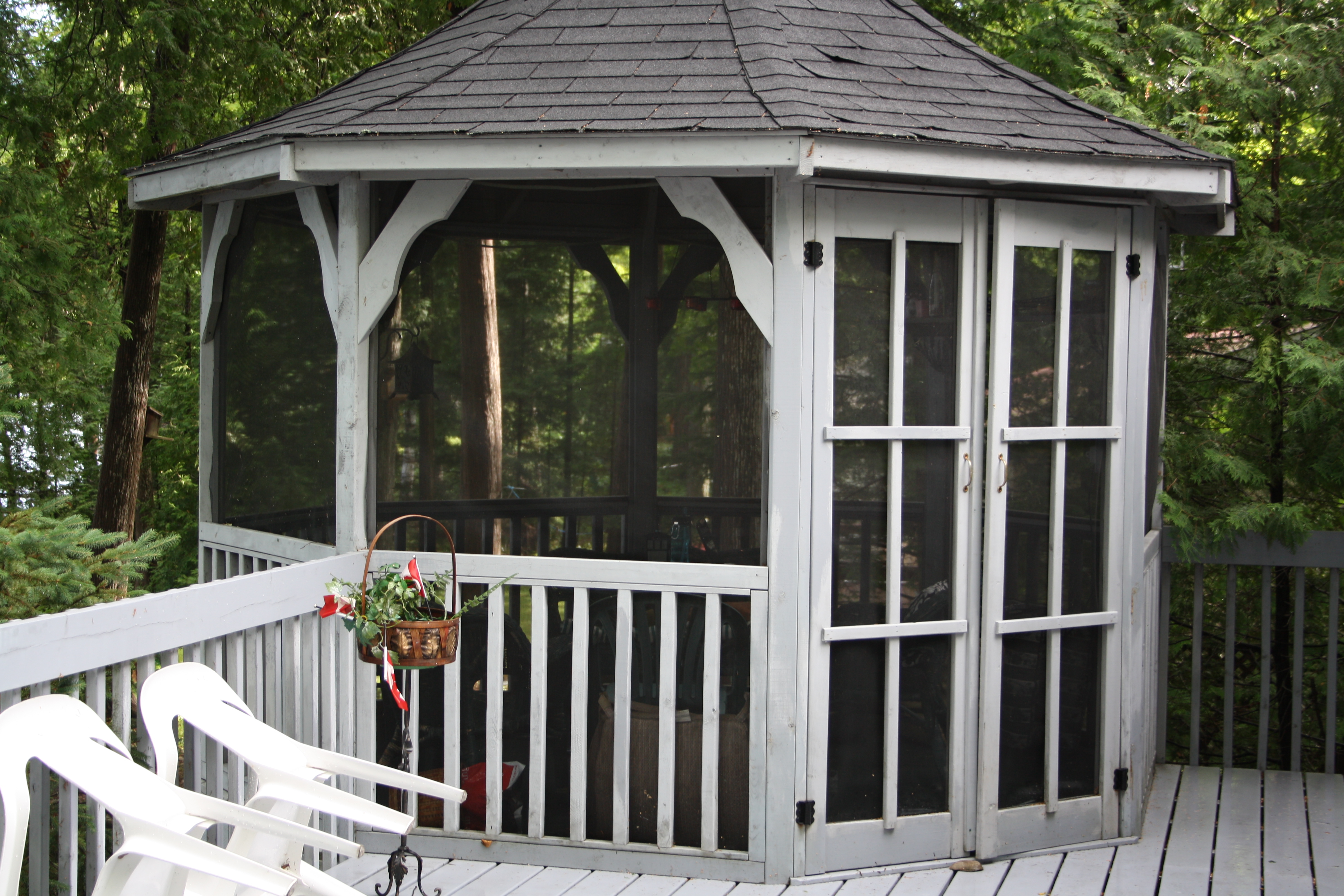
This past June 30th I began my ‘break’ from a pay cheque and on July 1st arrived at my mom’s cottage with my laptop, thesaurus (I’ll use the internet version, but nothing beats my dog-eared Gage Canadian Thesaurus), a bullet point goals, strategies and writing schedule and, dare I say it—okay I’ll say it—a suitcase of dreams. As luck would have it, the cottage was empty for one glorious week. I set myself up in the screened in gazebo, dialed in CBC Classical and I wrote, most of it pretty good, I thought. When the week was over, I returned home to my home office. As the summer weeks fell away, I continued to write and by the end of the summer, I’d edited 45,166 words—150 pages, of my original 70,000 word first draft. Not bad, I thought again. To keep myself on schedule, I’d arranged to submit twenty pages to my first reader, and either over peppermint tea at one of our houses, or via Skype we worked through the fruits of our labours. (Off for most of the summer, she worked as hard to submit her own twenty pages to me.)

In September, my bi-weekly writing circle resumed and I began another U of T creative writing course, Novel Writing Master Class. Confidently, I emailed out the first instalments of my new and improved chapters. Between both groups, fifteen fellow writers, the word came down—it sucked.

No hyperbole, I was DEVASTATED, CRUSHED, a snivelling, whimpering puddle of pathetic, worthless doggie dodo.

Never before had I worked so hard and never before had my writing received such harsh critiques. How could this be? How could I have gotten it so wrong? I’d quit my job for GD sake. You know what they say; when you hit rock bottom, there’s nowhere to go but up. But like the Tin Man, my joints had rusted with all the ugly-cry tears I’d split. I needed help getting up.

Lucky for me, my village rallied around—more than one carrying a sharp stick happily used to poke me with. Some of the very people who were (politely) telling me they weren’t feeling a connection to my characters and didn’t care to turn the page, in other words that my novel sucked, were the very people who sent me private emails, called me on the phone, offered to look at my re-writes before scheduled submission and took me out for tea.

Who were these good Samaritans? They were my tribe, my peeps and most of them, the really good ones, had all been where I now found myself, in the pit of despair. Without fully realizing what I’d managed to do, I discovered that over my early writing years I’d built a strong foundation of tribe members who genuinely cared about me and about my work. Equally important, I’d also managed to leave behind a trail of wet blankets, those naysayers who didn’t value my artist view of life.

Wow, I began to think. I really am clever. If all these wonderful writers (and close, supportive non-writing family and friends) thought I could fix my work, then I owed it to them to pull myself together.

This was fixable. It was doable. I’m woman writer, hear me roar.

Not so fast Sparky.

The hard work was yet to come. Since my breakdown, I’ve spent vast amounts of time, sitting at this chair (most of it writing, although I’m pretty wicked at spider solitaire). Some days I’ve had to have harsh conversations with myself and other days recognized I needed to pull out my gentle grandma voice (okay, I’m a young grandma, by Grammy I am). As we speak, I’m now preparing seventy-five pages to submit to my one-on-one instructor and ultimately to the Continuing Studies panel who will deem whether my work, whether I am, certificate worthy. I now feel confident that I am.

To those of you who are at the early stages of your writing careers, I strongly urge you to join a writing circle, go to conferences, take courses, network and build your own tribe. Step out of your writing space and introduce yourself to your village. Because if you are serious about becoming a writer, you will eventually have a dark-night-of-soul somewhere along your journey and you’re going to need your village.

A special thanks to my tribe, but please don’t shut off your phones. I’m up for submission soon and I might be calling!

If you live within driving distance of Durham region, have a look at what the WCDR has to offer new and not so new writers.

www.youtube.com

11 Comments

Filed under Writer's blog, Writer's journey, Writing

A Dragoness Made Me Cry

Yesterday, I made the trek into CBC Toronto to watch the Canada Reads final debates. (Yup, that sure is me right behind Jian Ghomeshi’s shoulder.) Although this year’s debate has not been without controversy, specifically the incendiary comments made by Anne-France Goldwater, I am so glad I made the trip into town to catch the debate live.

I’ve never been a very political person. I know little about Iranian or Chilean politics so am completely unqualified to comment on what Ms Goldwater said about Prisoner of Tehran or Something Fierce. However, I do agree with the panelist, Shad, (who is this amazing guy?) that if the debate had been shutdown, the message would be sent to Canadians that it isn’t okay to disagree or to voice certain opinions in this country.

The most moving moment of the week for me came in the final few minutes of the Q & A section of yesterday’s debate when Arlene Dickson, star of Dragon’s Den, spoke about why Canadians ought to read books.

“People who haven’t read and aren’t considering picking up a book again because they live in that short text world, need to understand that when they get up in Canada, that they are living in the best country of the world, and that we stand on the shoulders of giants. And that’s why we live in the best country in the world. And the giants are the people who are willing to put themselves out there and share with us the journeys they’ve been on so that we can become better as a nation. To me that’s what Canada is about. We are about listening and understanding and learning as a multi-cultural unit and taking the voices of the individual and making it into something amazing. So read books. It is so important.”

Arlene’s passion brought me to tears.

The experience of being in a studio for a live taping was fun, but what I take away from this past week and indeed, the weeks leading up to the debates, is that books matter and I’ve been reminded of the power of the written word. Fellow writers, it can’t be overstated; as storytellers we have a responsibility to tell stories, stories that shine mirrors back at ourselves and our world, stories that move and motivate and resonate.  Books are relevant.

Write On!

Each of the four debates, Q & A sessions, and panelist confessionals can be found at the Canada Reads website. Whether you agree with what the panelist say, I promise they will make you think.

3 Comments

Filed under Writer's blog, Writer's journey, Writing

Be Careful What You Say, I’m Writing a Book.

Recently after reading at an open mic in Newmarket, two teenage girls approached me to ask about my writing and specifically the story, For Sale, I had just read. Before leaving, one girl asked whether the story was real and had actually happened. Although I had anticipated someday being asked this question, I still stammered through, “No, it’s completely fictitious.” Which is the truth—all except for the completely part.

Not one scene in this story ever happened, but what was true was a feeling of loss I was experiencing at the time. Strong emotions and feelings are my inspiration, my jumping off place, not actual people I know, or actual events I’ve witnessed. So it was pretty cool when Terry Fallis (a judge in the Random House Student Award) said in his comments about For Sale: “I felt the tension, the anticipation, and the daring wrapped up in her words. Then I felt the sudden sense of loss, just as Sharon Overend had intended.”

Nope, it doesn’t get cooler than when a reader actually gets IT.

I suspect every fiction writer comes up against the did-this-really-happen question at some point. After all, the work comes through us, so it seems a natural question to ask. The people close to us are bound to believe they recognize themselves, or their life situations, in our work. I don’t know how to get around it. I’m a writer and as a writer, I’m an observer. My characters rise out of the many rich, interesting people around me, but are not portraits. They are caricatures, often an amalgamation of several people.

Before you ask dear family and friends; you are not in my novel—mostly.

My story centres on a Roman Catholic, Irish Canadian family living off the Danforth in Toronto from the 60’s onward. It’s true my teenage years were spent living one block north of the Danforth and at the time I was attending a Catholic, all girls’ school downtown, and I do come from a large family, but let the record reflect; I’m only ¼ Irish Canadian and I only lived off the Danforth for five years.

Although, I may have used some family members as character archetypes, it’s important to stress this family is not my family. The similarities of place and character were reference points for me and not meant to draw comparisons to my own life. It’s a work of fiction.

Having our family and friends recognize themselves in our writing is a real danger and if left unchecked can also be the source of writer’s block. Too many good writers have been stopped in their tracks worrying what their loved ones will think. Quit it!  It takes a lot of courage to write and maybe for our families to read our writing, but we have to tell our stories with the characters who are speaking to us, warts and all.

Writers, proceed with caution, but please, do proceed!

What do the pros say on this subject? I’ve read several interviews and most authors admit to having grounded some of their characters in personalities they’ve know. Others say no they haven’t.

Not only do I base my characters on people I know, I use people’s names. In Standing in the Rainbow, Can’t Wait to Get to Heaven and Welcome to the World, Baby Girl!, there’s this couple, Norma and Macky Warren. Those two people are based on my best friends who live in Birmingham. After I wrote the book, I called Norma and said, “Honey, I’ve got these two characters. Help me think of some great names to call them.” There was this silence and she said, “Well, you may as well call them Macky and Norma because everyone’s gonna know who we are anyhow.” So I said, “OK!” Well, Norma has become a local celebrity. She goes out and signs books, does speeches, and is having a wonderful time! – Fannie Flagg – Fried Green Tomatoes at the Whistle Stop Cafe

Not at all.  The plots are not my life, those characters are not people I know, and none of them is me.  My job, as I understand it, is to invent lives that are far more enlightening than my own, invested with special meaning.  That’s the whole advantage of fiction over life: you get to control the outcome…

I populate my setting with characters who will serve my plot.  Those characters are my slaves.  They must do exactly what I want, or the story falls to pieces.  No actual person I know is that cooperative.  So I invent people from scratch, starting with what they need to do, and working backwards, inventing life histories that render their actions believable.

Pure invention seems straightforward to me, much easier than trying to jam an already formed personality into a mold it won’t fit. – Barbara Kingsolver

And here’s what Jonathan Franzen had to say.

7 Comments

Filed under Writer's blog, Writer's journey, Writing

I Walked Into a Cow Once!

True story. I was at the cottage, probably fifteen or sixteen-years-old, walking the gravel road to our country store, my face buried in a book. I’m sure bringing said book on a solitary three-quarter of a mile walk was my attempt at stealing a few moments of quiet from the usual cottage related shenanigans that were a constant at the McRobb Mob Inn.

Next door to the store was a century old farmhouse that had seen no home improvements since the original carpenters tucked their tool belts away –the floors were still dirt and there was no indoor plumbing. The farmer, Old Camack (his family name was Camack and he was extremely old) kept his one cow leashed to a fence post at the end of his driveway.

Bet you know where this is going.

Have you ever tried walking with your eyes closed? If so, you’ll know that it’s almost impossible to walk a straight line. Well, I can assure you walking with your nose buried in a book amounts to exactly the same thing. I can only imagine what that cow must have been thinking as she watched a skinny girl with a paper foldie thing clutched in her hands aiming straight for her. Bidding her time, that crafty old cow waited for our noses to almost touch before she let out a moo that sent me skyward. Once I recovered, I do seem to remember a hint of a smile curling around her lips.

I loved reading books then and l love reading books now! Reading brought me to writing. I know, I’m preaching to the choir, but it bears repeating; writers you have to READ. Okay I’ll get off my soapbox. You writers get it, right?

I’m a firm believer that you can tell a lot about a person by how they keep their personal space? (No you can’t come over to my house.) On a recent visit to a writer friend’s home, I was thrilled to see every inch of wall space in her sitting room was covered with bookshelves. Now that’s a writer for you. My house looks the same, except I could add; every flat surface in my bedroom and office is also covered with books.

Currently, I’m working my way through the 2012 Canada Reads shortlisted books. The Game – Ken Dryden, On the Cold Road – Dave Bidini, Prisoner of Tehran – Marina Nemat, Something Fierce – Carmen Acquire, The Tiger – John Vaillant. Although I’m only on the third of five, I highly recommend Prisoner of Tehran, but be warned—you won’t come out the other side the same person you went in. It’s a life changer!

I’m always looking for new books to read so let me know your current favourites and I’ll tell you mine.

I’ve attached a short video wherein Ian McEwan discusses showing up at your desk to write and schedule reading into your day.

http://www.youtube.com/watch?v=q0ZEE9_iZRk

6 Comments

Filed under Writer's blog, Writer's journey, Writing

I Like Writing About Boys.

I find men interesting and often find myself watching them as I would a wild, strange creature in a zoo. Men fascinate me. Consequently, after years of watching the boys in my life, I find it easy to write male characters. Weird but true. What I have trouble writing are female characters. Weirder, but also true.

I grew up in a female-centric (is that a word?) home. I went to an all girls’ high school. Most of my friends are women. And I’m a woman for god’s sake. So why is it so damn hard to write female characters? You’d think writing from a female POV would be like falling off a horse. Not!

As I’ve mentioned in earlier blogs, my current project is a novel I’ve been working on for some time. The story centres on a large, Irish Canadian family struggling with the life-threatening illness of one of their own. I’m using three rotating first person POVs to tell the story; Anne, the matriarch, Burt the eldest son and Barb, the youngest sibling.

Burt is fun to write. I arrive at my desk excited to work on a Burt chapter. He’s a boy and I like writing about boys!

I have also had knee slapping fun writing his younger sister, Barb’s character. A female character, true, but one who does every blasted thing I would love to do, but never in a million years would do. Her sense of adventure and F-you-F-the world attitude is wonderfully freeing. Burt and Barb show up on the page with very little effort from me.

In contrast, Anne, the matriarch’s character may one day cause me to throw myself in front of an ice cream truck.

During a particularly painful critiquing session at my bi-weekly writing circle, someone posed the $64,000 questions; why did I think Anne and I weren’t connecting and (maybe more importantly) what was I afraid of?

Anne, I thought, I’m afraid of Anne. After all, she’s living every parent’s worst nightmare—her kid is sick and the family aren’t handling it well.

We aren’t meshing because as her world falls apart, so must I, but I’m not, I’m not letting myself fall apart (ficturatively of course).

Crap!

You’re right, you’re right. It’s my responsibility to stand with Anne, to take my reader where she lives and right now that’s a dark and scary place. I have to make the readers experience what Anne is experiencing when she encounters her monsters. My readers need to know I’m holding the steering wheel firmly in the 10:2 position.

But alas, my wonderful writing friends have come to the rescue and suggested an exercise to help me access Anne’s feelings. Here’s the exercise (designed to push the writer deeper into their characters) in case you find your characters are misbehaving as badly as Anne.

Copy a strong line from your existing prose onto a clean piece of paper. With that sentence as your guiding light, start writing everything you see, hear, smell, FEEL around that sentence. Keep your hand moving for fifteen minutes.

Here’s the sentence I chose.

It scared her to realize how ill her child really was.

Fifteen minutes in, I was shaking. I’d reached down into Anne’s life, and finally I had written two strong, emotive pages I could work with.

Anne scares the bejesus out of me, but I owe it to my readers (and to myself) to push my fears aside and write Anne’s true story.

Good luck, writing comrades and may the force be with us!!!!!!

“Mystery is at the heart of creativity. That, and surprise…As creative channels, we need to trust the darkness. ” ― Julia Cameron

“Write what disturbs you, what you fear, what you have not been willing to speak about. Be willing to be split open.” ― Natalie Goldberg, Writing Down the Bones: Freeing the Writer Within

10 Comments

Filed under Writer's blog, Writer's journey, Writing

My Muse Just Left For the Casino!

How do I know? Well, there’s money missing from my wallet and she sure as heck isn’t here with me, in this lonely, windowless, overheated office. Doesn’t she know about my abandonment issues?

Fellow artists, I know you’ve felt the empty feeling and the pull-your-hair out panic when your muse is MIA. As I sit here worrying I might not have any money left when that crazy b***h gets back, I wonder—can a muse really leave? Is my muse a separate entity, or part of me? Aren’t those rare, fleeting moments of true inspiration actually me assessing my own subconscious? If I think of my muse as a separate entity, aren’t I essentially using a get out of jail free card and letting myself off the hook to explain away why I’m not producing? Maybe, but is that so terribly wrong?

This morning I watched a You Tube video where Elizabeth Gilbert (author of Eat, Pray, Love) questions why artists feel so tortured when their work isn’t going well and why so many plummet to the deep pits of depression and even insanity on such a regular basis. She goes on to suggest it might be healthier if artists did identify their muse as an external being, a creative divine attendant spirit that lives in the walls and seeps out and over an artist. After all, our art, although an act of expression, is in fact our job. We wouldn’t put ourselves through the dry spells if we hadn’t been called to do this work. When we show up for our job, we’re doing our bit and when the genius (Romans called a muse their genius) doesn’t visit us, well it isn’t our fault. Right? An external muse eliminates the need to torture ourselves over something completely out of our control and we get to keep our marbles. Sounds like a plan to me.

So as I plod my way through my re-writes, I’ll continue to look to my muse—even if she’s decided to wear her invisible cloak that day. And once in a while, I’ll even let her take a break if she has to blow off some steam at the casino. I’ll just have to get it in writing that she’ll be using her own cash from now on!

Here’s the link to the video. I think artists—and those that love one—will benefit from her sense of humour. We could all learn to not take ourselves so seriously.

Enjoy.

11 Comments

Filed under Writer's blog, Writer's journey, Writing

Finally Blogging

Welcome to my first blog post!

My goal for this blog is to not only sound a foghorn out into the world that I seem to remember is out there (I intentionally write in the one room of the house without a view), but to share my journey toward publication with fellow writers and book lovers alike. With regular posts, I also hope to assure my family and friends who may not see me again until my novel is finished, that I’ve not succumb to a lethal case of carpal tunnel syndrome.

As you will discover, my story is not that different from most other writers. I knew I wanted to write from the time I was a child. Even at the age of ten all I wanted for Christmas was a typewriter (yeah, I said it, a typewriter. I really am that old) to write my stories. As it often does, life got in the way and I lost sight of my childhood dream. Then I remembered. I bought a notebook and the nicest pen I could afford and I was off again, spinning my yarn.

My first attempt at submitting a story was to the Chicken Soup series and out of 4000 stories, mine was shortlisted for Chicken Soup for the Grandparent Soul. I survived two further cuts, but ultimately ended up on the proverbial cutting room floor. Rather than discouraging me; a fire was lit inside my nice pen.

Several years have passed since that first story, and I think it’s safe to say, I have single-handedly supported Canada Post with all the mail I’ve sent to prospective publishers. I’m pleased to say a few have sent me acceptance letters/emails and I’ve finally seen my name in print on something other than a credit card bill.

In the spring of 2011, after years of juggling a full-time job (Marketing Manager for a children’s edu-tainment company), running a large household of super-sized people, working toward a certificate in creative writing from U of T Continuing Studies and writing every spare hour I could steal, I knew the risk of my going postal was becoming a real possibility. Something had to go. With my husband’s support (smart guy) I  left my job and have committed myself full-time to finishing my  novel.

And now the next step – Blogging, Facebook and even Twitter. I hope you will join me as I complete my final course and swim upstream inside the wonderful, exciting tide of literary fiction.

18 Comments

Filed under Writing