Farewell to a Friend

This past weekend, I was reminded of the true meaning of unconditional love, a lesson that will stay with me forever and that will hopefully make me a better person and by extension, a better writer. As a rule, I have tried not to discuss my family too much (if you know me personally, you will know there is little I enjoy talking about more than my family) and have tried to keep the focus of my blog postings on writing. But, with your permission, I would like to share with you what losing our sixteen-year-old black Labrador Retriever has meant to me and to my family.

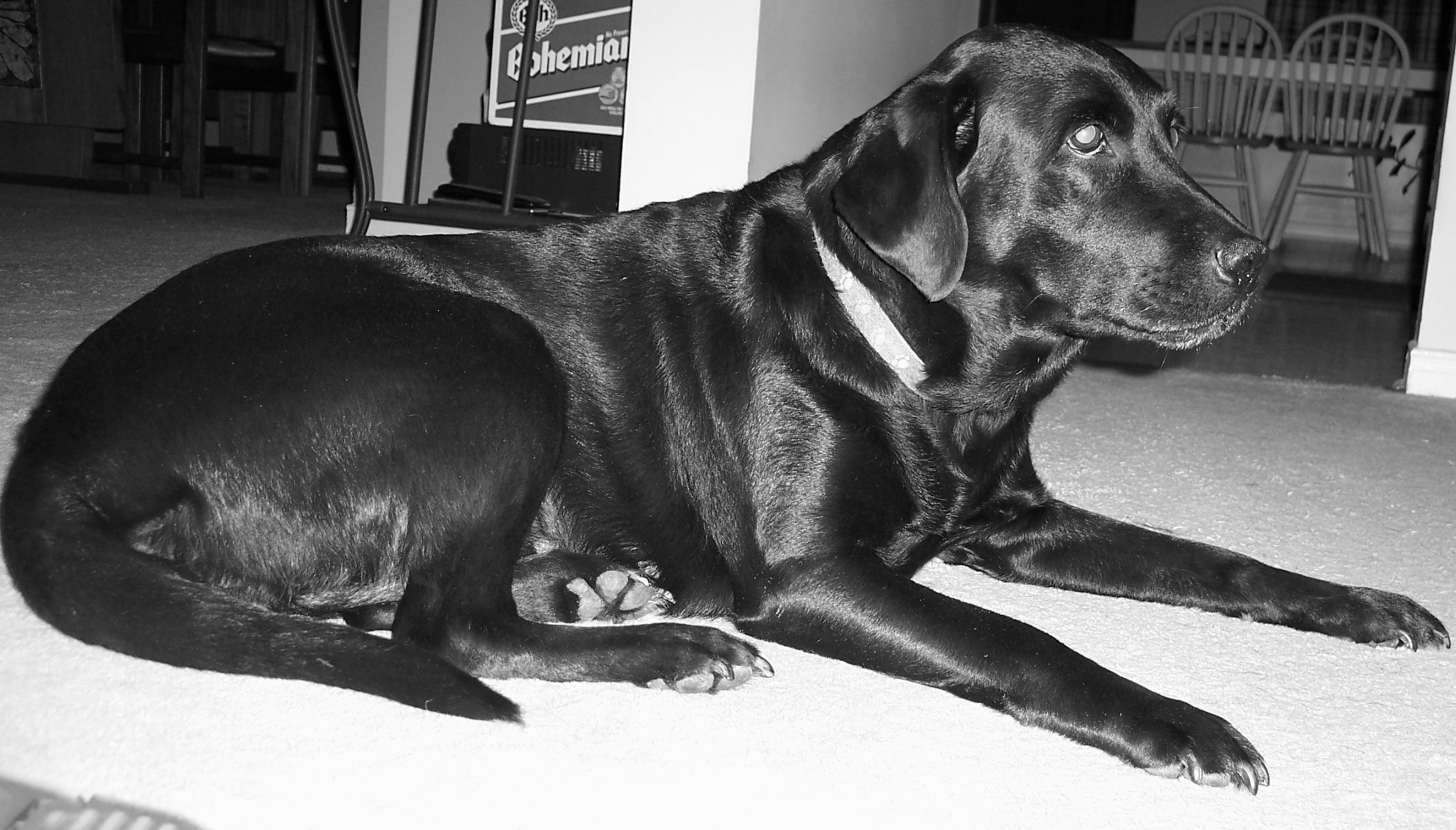
Jazz wasn’t supposed to be our dog, but in the split second it took for her to tear past me sixteen years ago, my heart knew she was indeed, my dog. As it turns out, an acquaintance of my husband had an eight month old puppy that wasn’t getting the attention she deserved and this woman cared enough for her, to want to find a family who could give her what she needed. My husband thought of his brother who already had one Lab and it was at his brother’s house I first met my dear friend. Unfortunately, the idea of a female partner drove the first dog crazy, which drove my brother-in-law’s family crazy, the end result being, Jazz came to live with us.

Jazz was a perfect match for our family and before long she adopted my husband as her favourite person in the universe.

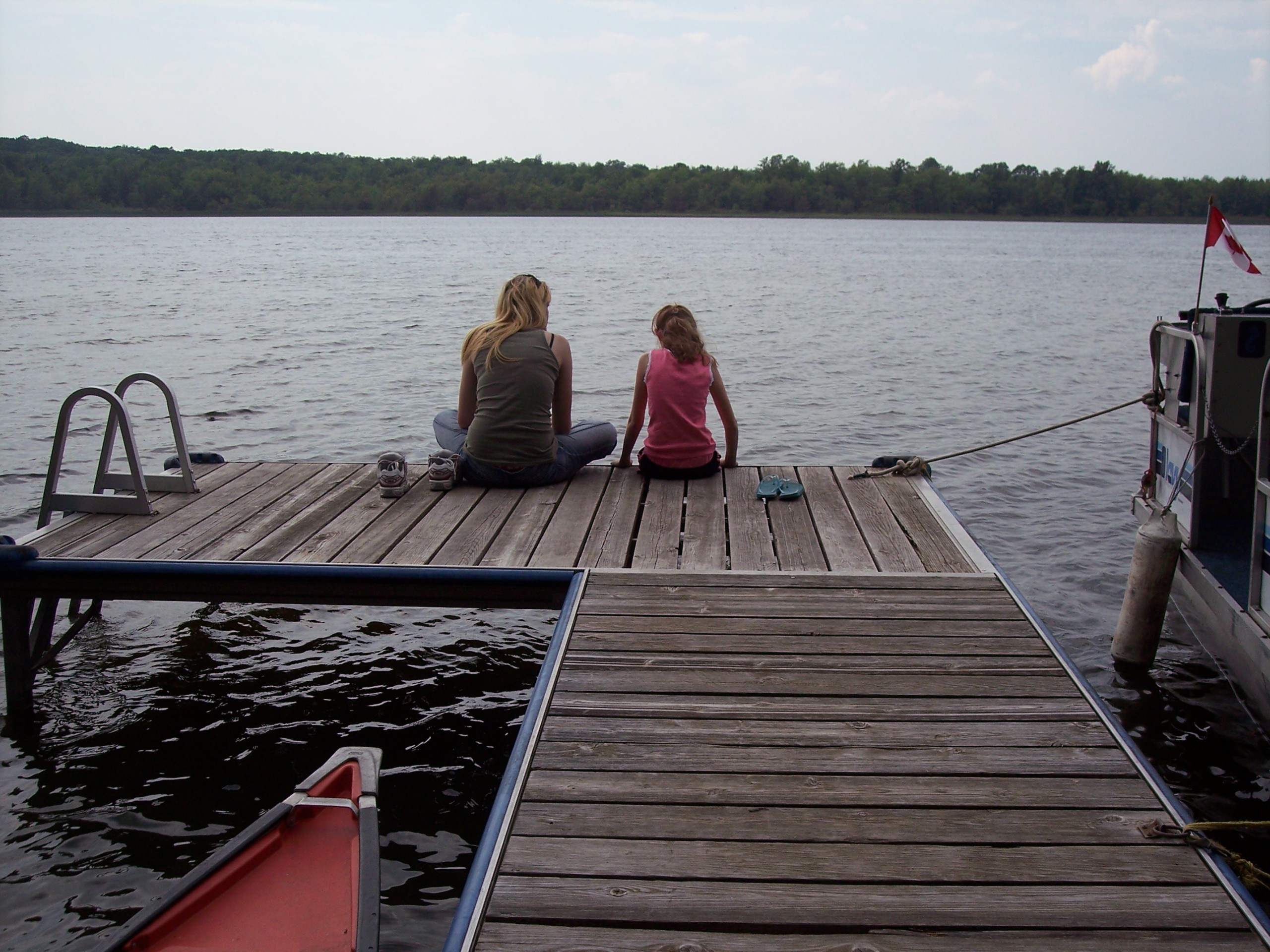
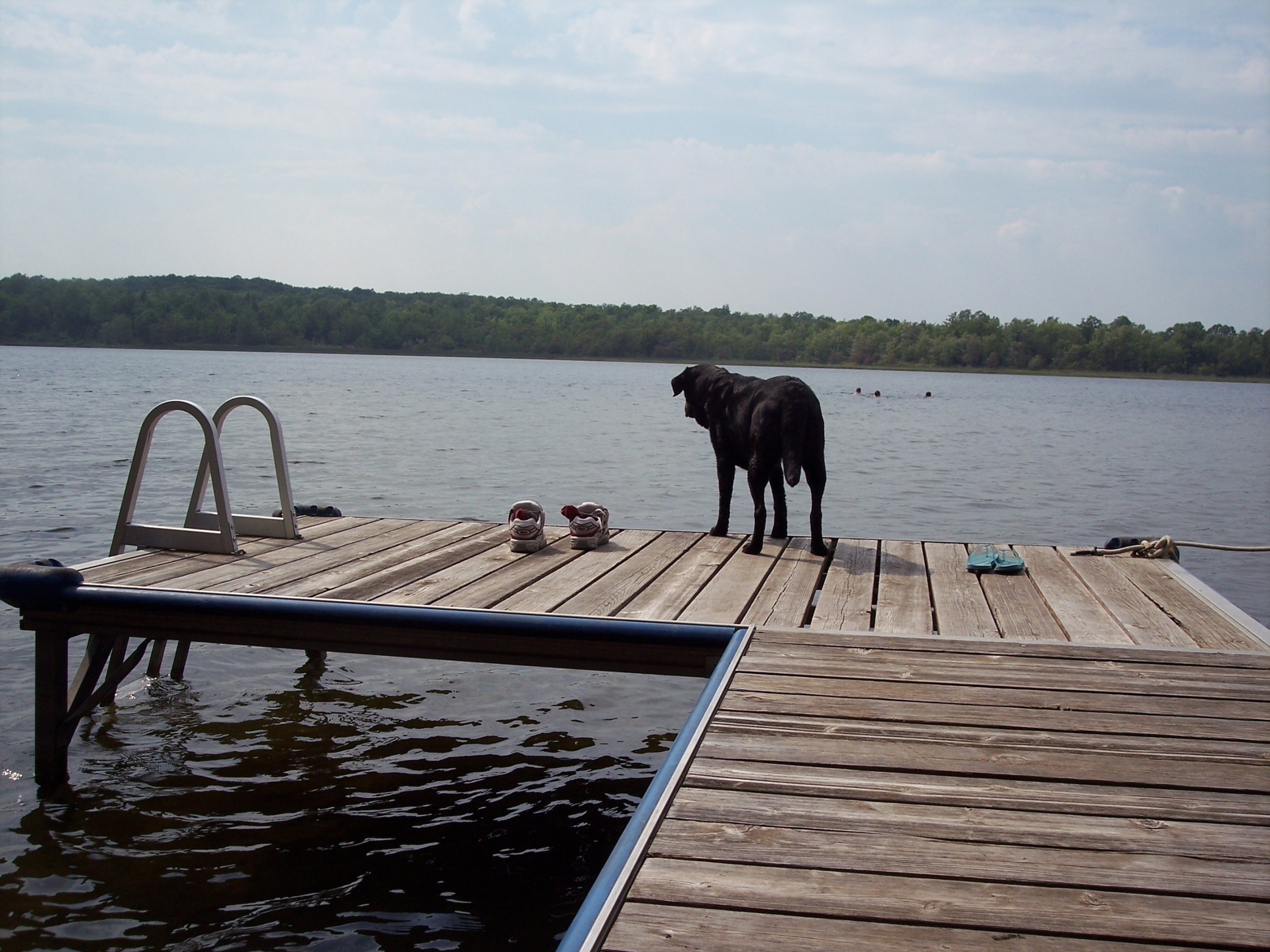
But alas, for the past year we have watched as Jazz’s body began to show her age and ultimately betrayed her. Over this past weekend, my husband had to carry her down the stairs. Knowing he had a day of gardening in front of him and knowing Jazz wasn’t about to let him do so without her, we placed her bed next to the planter. She never lay down. Refusing to leave his side despite her obvious pain, she dragged herself back-and-forth from the shed to the garden, matching each of his movements with lumbering strides and occasional stops to catch her breath. It was obvious her body had finally decided enough was enough. Yesterday morning, we made an appointment for her and again carried her outside to sit in the gazebo one last time while we had our morning coffee. For the last few days, I have thought about Sasha Trudeau’s black Lab that sat at the lake’s edge where Sasha’s body had been swept by an avalanche slide, also refusing to leave his friend’s side. I cried when I read that story knowing full well Jazz would have done the same.

The joy of having Jazz in our lives and now the sorrow I feel with her passing, will make me a better writer.

I’ve talked about it before, but in order for a writer, regardless of their genre, to write relatable stories, they must be willing to dig deep. Having just gone through the painful experience of watching Jazz struggle to remain the best dog for us, and then to watch her close her eyes and hear the vet whisper, “She’s gone,” has added another layer to me and hopefully to my future writing. Whenever I am called on to write about loyalty, sacrifice, dignity, unconditional love, or letting go, I will be able to look back at Jazz’s life and know I’ve seen each before.

She was a dear friend and we will miss her.

12 Comments

Filed under Writer's blog, Writer's journey, writing,

And a One, and a Two, and a Three

I don’t play music, but I sure do love it. Shake my paternal family tree and look out, because a lot of very good musicians are going to land on you. I’m extremely proud to say my three children, and now my grandchild, have all inherited the musical gene. Music is and always has been a huge part of my life.

So, no one had to tell me how music could/would affect my moods. When I’m facing long hours of housecleaning, I like to put on fast, upbeat music which energizes me. Never having been a person who enjoys exercise, I make sure my IPod is loaded with great music before I set out for a walk. When one (or all) of my children were being, let’s call it—challenging, and I found myself wondering how much I could sell them for, I’d dial in CBC Classical and watch their (and my) mood quiet.

Now that I write full-time I don’t have the luxury of waiting for my muse to stir awake whenever she feels like it. Each and every day, I arrive at my computer determined to produce. Nice, but some days my darling muse really does just want to stay in bed. So, what’s a girl to do? Music. The quickest and least painful way to end my muse’s snorefest is to plug in Mozart Symphony No. 40 and let it rip.

A lot has been written about the power of music on the brain and creativity. It’s a proven fact that children who study music perform better in school. It turns out Einstein used music for creative inspiration. In particular, pieces paced at 60 beats per minute engage the brain at a lower subconscious level and with a relaxed mind, our creative brain is able to roam.

Classical music works best for me, but you may have to try different types to find what gets your creative juices flowing. Although I don’t listen to it as I’m writing, I often put on songs with strong lyrics—Leonard Cohen, Neil Young, Carol King, (Did I just date myself?) when I’m trying to get my brain in a poetic frame of mind. However, as a general rule, I prefer instrumental pieces when I’m actually working. Being a wordsmith, I get too lost in the lyrics if I hear someone else’s brilliant language.

What do you listen to when you write?

Here’s an interesting video about improv and what your brain looks like as you are creating.

“Musician and researcher Charles Limb wondered how the brain works during musical improvisation — so he put jazz musicians and rappers in an fMRI to find out. What he and his team found has deep implications for our understanding of creativity of all kinds.” TED Talks

your-brain-on-improv-charles-limb-on-ted-com

1 Comment

Filed under Writer's blog, Writer's journey, writing,

You Show Me Yours and I’ll Show You Mine

Oh, when to show your work and when not to, therein lies the question. For many writers we have been showing our writing to teachers and parents all of our lives. After all, most of us knew we wanted to write from the time we were in grade school. But once you’ve graduated from class papers and essays, once you’ve become serious about your work, when is a good time to show others your work and who should you show it to?

Don’t show it too soon

Too often we are excited and proud of our work and like new love, want to shout it from the rooftop. I suggest when you feel the urge to strip and strut during a first draft that you keep your shorts on and not show it to anyone. Step away and take a break. Although it is brilliant that you think you are the next Shakespeare, showing others your work when it is in those early stages of development could derail you and make the second, third and fourth drafts difficult to face. By nature a first draft is just that, a first draft. It’s cookie dough that has yet to be shaped and baked. Don’t get me wrong, cookie dough is delicious, as I’m sure your first draft is, but it isn’t a cookie and your work isn’t a story yet.

When you spend time yakking up your work and flashing it around to all and sundry, you are depleting your own creative energy. Save that energy and direct it toward your next draft.

Be careful who you show it to

So you have heeded my advice and decided to hold off showing your baby to anyone until you have given it a bit of spit and polish. Now the question is who do you show it to?

Not your mother. Lord, not your mother.

Moms are great. I have one and I am one. But when I think of moms, I think of them as belonging to one of two camps. You have the cheerleaders and you have the crushers. Although my mother thinks I am amazing as her kid, her biggest worry is I’ll get too big for my britches and feels it her duty to keep me grounded with comments like: You can’t make money as a writer. Don’t quit your day job – oops too late for that. Aren’t you finished that book yet?

Cheerleader moms are not much better. Although you never leave them feeling like you want to slit your wrists, their comments may not be valuable feedback. Remember your crappy tissue paper artwork she still has in a shoebox in the closet? I rest my case.

There’s a reason doctors are not permitted to operate on family members! Friends and family are most likely not writers and showing them your work is at best little more than a crap shoot and at worst bone-crushing, mind-numbing, ego-shattering suicide.

Writing Groups

I am privileged to belong to a very good critiquing group and have found their feedback valuable. As long as there are one or more skilled writers in your group, or at least beginning writers who are taking the necessary steps to become skilled writers i.e. workshops, courses, reading about their craft, I would suggest you listen to what is being offered. Most groups are able to provide feedback on structure, character, pacing and syntax. However, it is still important to remember it is your work and it would be artistic suicide to allow your writing to be dictated by a group. Don’t write to please your writing group.  Weigh carefully and thoughtfully what they suggest. If you ask six writers their opinion of your work, you will undoubtedly receive six different opinions. If however, all six, or the majority of the six, hold the same opinion, listen to them because there is very likely truth in what they are saying.

The other caveat I offer is you must trust your group members to critique the writing, not the writer.  Be careful that the criticism never becomes personal. As writers we tend to be sensitive people and our egos are easily wounded. If  you ever feel the feedback has shifted off your writing and onto you personally, run for the hills. Trust is non-negotiable in a writing group.

Beta Reader

Like a good  Alcoholics Anonymous sponsor, one trusted, honest, reliable person to read your writing will keep you on track. It is priceless to have a person who has the best interests for your writing in mind and who knows your work and your intention for the work. Although it may appear they are a rare bird, I know they exist. So, seek out and find one of those rare birds.

A reliable beta reader, a good writing group and determination to make your writing the strongest it can be will take you the distance.

I would love to hear how you decide when and who to show your work to.

2 Comments

Filed under Writer's blog, Writer's journey, writing,

5 Ways to Writer Proof Your Life

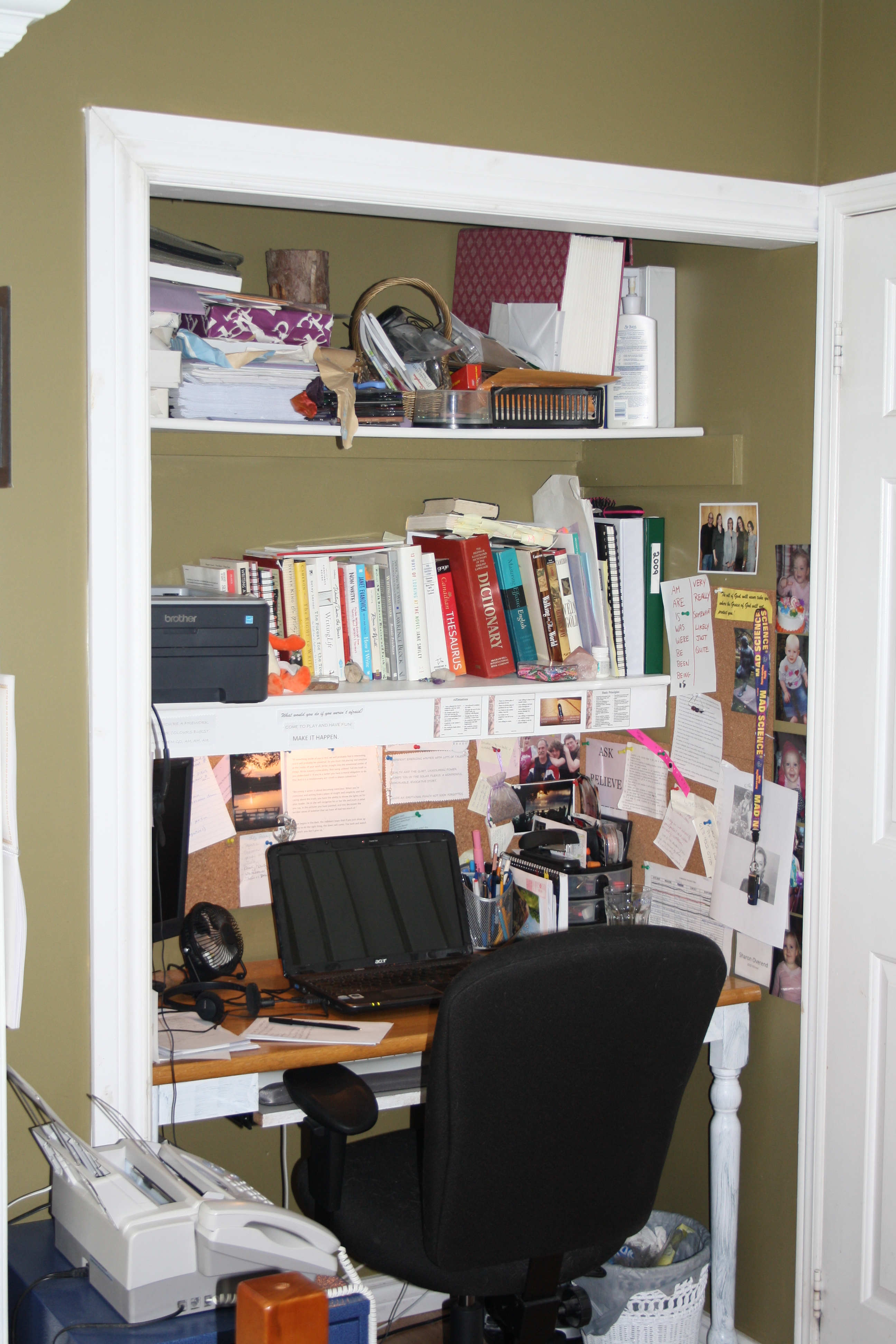
Current Closet OfficeThis past weekend, I had the pleasure of attending a writer’s conference and spent a big chunk of the day in the company of two younger women who between them have seven children under the age of nine. I applaud these brave women who, despite their young families, are still working hard at their craft. I know when my three children were little I neither read nor wrote for fifteen years. It is no small feat juggling work, family and a passion. My hat is off to you ladies and your commitment.

So the question is how does a writer (or any artist for that matter) balance a writing life with the rest of their life?

Unplug

The first thing I would suggest is, if you live with a lot of people, buy yourself some good earplugs. Although my children are now grown, they haven’t all left the nest and my house is packed to the rafters. I know with 100% certainty that I would never have written a single word over the last ten years if it weren’t for earplugs. Earplugs and a commitment to make my life work are what help me survive the mayhem.

I live in a 2,000 sq. foot house with six other people (three generations ranging in age from 62 yrs – 2 yrs), a sixteen-year-old, ailing dog and four cats. (Some days I peer around my noisy, nuthouse and honestly wonder whether I’m in fact, living in a displaced person’s camp or maybe an animal rescue shelter.) We have a suburban sized lot and at present five people are sharing my car. Lucky me. Well yeah, I am lucky. Although it often (very often) doesn’t feel like a good thing to have so much activity swirling around me, I think my art benefits from our offbeat life.

Plug In

I strongly suggest that whatever your current living arrangements are, steal from your own life. The craziness of my house provides me with endless story ideas and plot twists. If last night’s brouhaha over wet rags left in a toddler’s bicycle basket vs. abandoned pop cans, juice glasses and coffee mugs on a workbench is any indication, I will never run out of material.

Space Out

I envy writers who are able to write anywhere, coffee shops, food courts, but I’m not one of them. I need a designated writing space. Never having had the luxury of spreading my family out over a 10,000 sq foot mansion or 50 acres of land, I’ve had to be creative when it comes to creating a writing space for myself. When I was a teenager my mother moved us (herself and four kids) to a three bedroom apartment. Finding space to steal away and write seemed impossible until I discovered our walk-in closet. I pushed my desk into the closet and pulled the door closed. In creating my closet office, I’d found a safe place to pour my teenage heart out onto the page. Today, I still have limited space to call my own and have once again created a closet office. Five years ago, I turned the smallest room in the house into my office and in an attempt to maximize the space, pushed my desk into the closet. TaDa!

Disconnect

Seems like a pretty simple suggestion and we all know what we have to do, but most of us are not always strong enough to do it. So I implore you, please help yourself by reducing your opportunities to diddle. Disconnect (or at very least shut off) Facebook, Google and your email account. If you are really good, and manage to get a lot done in the allotted time you’ve set aside for writing, reward yourself with an hour of playtime on your computer, but not until you are satisfied with your writing efforts. No cheating.

TVless

Do not have a TV in your writing room. If you have a favourite show and it airs during your writing time, watch it later on cable on demand, or on the internet (to be considered your computer playtime) once you’ve finished work. Simple but true.

If you allow it to, life will suck the artist right out of you. But…if you embrace your wild and crazy life, I promise you, your art will become a living, breathing wonder.


5 Comments

Filed under Writer's blog, Writer's journey, writing,

The 3-D Release of Your Story

Every writer knows they have to show not tell what’s happening in their story. I’m sure we’ve all been guilty, at one time or another, of reporting our scenes rather than living them.  I’ve tried very hard to pay close attention to show-don’t-tell as I move my characters through their scenes. Yet, I recently received a critique that mentioned “…it seems to me that they (my three narrators) report the events in a very episodic fashion.”

I’ve been chewing on this for a week or so and this morning, have come across an article from Writer’s Gym and an interesting essay, Animate a Three-Dimensional World, by Catherine Bush. I love when the right article comes across my desk or computer screen at precisely the right time. After reading this short essay, I now believe I know how to bring life to my scenes.

In my attempt to stage my scenes, I’ve been moving my characters through a two-dimensional world. What I in fact, need to do is animate my fictional world and populate it with three-dimensional characters who live in a three-dimensional world. I have to 3-D my fictional world.

It’s not enough to simply move characters, describing the actions they take along the way. With this in mind, I see what my instructor meant when he commented I should “…leapfrog over much of the quotidian and unimportant domestic moments and details and obvious staging (e.g., dishwashing, tea drinking, turning on stoves, making phone calls…which bring nothing to the story).” To do this, he’s suggested I bring my narrators up and out to give them a wider view of their lives. Another way of saying, 3-D them.

We want readers to imagine our characters, and their environments, as having literal solidity and depth. Catherine Bush

Fair enough. Okay, how?

Create a visual shift and move the reader’s eye and attention—high to low, near to far. In doing this, the writer creates a sense of depth.

Show a scene through something—through a smeared window or heat rays rising off hot asphalt. Draw an image of something frail or transparent moving over something more solid—a child observing his world as flickering candlelight waves off his bedroom walls. Make your reader experience your characters world, a woman walking with the worn inner lining of her shoe rubbing against her heel, the edge of a glass top table pressed against his forearm. It’s not enough to ask, what does my character hear, feel? The writer should also ask, what else do they hear, feel? Distant voices raised in another room while a radio plays in the foreground, the feel of wet seeping through a damp cotton shirt. By weaving in these 3-D details, the writer brings depth to a character’s world.

I love the idea of layering my scenes. In my first draft, I report what I want my reader to see, then on subsequent drafts I can move my reader’s eyes up, down and all around. Easy as pie.

As I finish the short story I’ve been having a fling with, and I’m about to travel downtown to pick up the hard copy edits of the first 75 pages of my novel, I now feel like I have direction and look forward to implanting some 3-D effects into my work.

2 Comments

Filed under Writer's blog, Writer's journey, writing,

Staying the Course

My intention for this blog has been to take readers along with me as I work my way toward publication. It wouldn’t be fair of me to only present one side of my journey. If I pour it on too thick and only trumpet my successes, I run the risk of readers wanting to reach through their computer screens to grab hold of my neck and choke the very, show-off life out of me. On the other hand, there is nothing more depressing, or off putting than to read a poor-me post. So, in fairness to you dear reader, I’ll admit, today I’m feeling a bit disjointed.

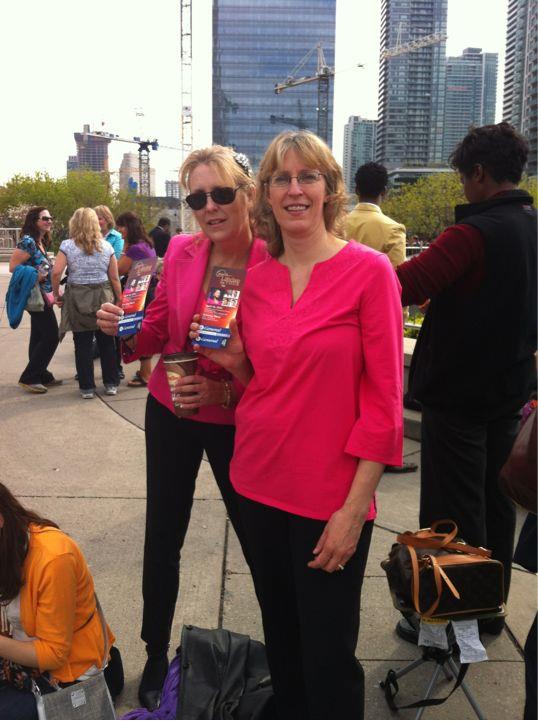
Last week, Oprah brought her Life Class to Toronto and I’m thrilled to say, I was there. The experience of being in the same building as the woman I’ve admired for most of my adult life and hearing from the four inspirational speakers she brought with her was an amazing, once-in-a-lifetime experience. I lay full credit at Oprah’s feet for helping me identify my life’s purpose and for giving me permission to go after it. At a time when I was still knee-deep in childrearing, Oprah’s book club reminded me that once upon a time I loved to read. Before finishing her first book of the month selection, I remembered in addition to reading, I loved to write.

The first show was about gratitude and the second (which I attended) was about forgiveness. I’m so grateful that I’ve found my life’s purpose and that I was able to share my Oprah encounter with my sister. By the time the show began, I’d already forgiven the nutcase who thought asking 9,000 people (mostly women) to make their way downtown and line up for general admission seating was anything but a really, really bad idea. Lining up and dealing with the nonsense of said 9,000 people, who were held for hours like cattle, was nothing short of insane, but all is forgiven.

So why the yuk feeling?

Two days before my big Oprah experience, I was riding a writer’s high. At our WCDR (Writing Community of Durham Region) breakfast meeting, I received a Len Cullen Scholarship and saw my first poem published in the Word Weaver.

Two days after Oprah, I felt the air had been sucked from my chest, when I received the long awaited critique from my U of T instructor, who wasn’t completely blown away by my brilliant (my adjective, not his) 75 page submission. Although he was very kind, and very likely correct, hearing a great part of my work requires a significant overhaul, was a bitter pill to swallow.

While reading his comments, the horrible little devil on my shoulder set into his predictable rant. See, told you not to get too big for your britches. Followed of course, by imagines of my well meaning mother reminding me I should have listened to her and kept my head low and set my sights even lower.

But wait.

Having my Oprah experience sandwiched between two successes and one, maybe not full on failure, but certainly huge disappointment, could not possibly be an accident. Could it? Nope. I know there’s a lesson in here and I suspect the lesson is – DON’T GIVE UP. There will be ups and there will be downs along my journey. I believe everything that matters to you will be tested. Holding your dream and your vision steady will not always be easy, but will nevertheless serve you well. The good and the bad are all part of the whole picture.

So I’ve taken the weekend to process last week. Then I reached out to my trusted tribe. They know my novel well and have alternately held my hand and kick my butt as need be. Not being people who will sugar coat anything, they agreed with some of what my instructor said, disagreed with some and added their own take of what is working and what isn’t working. Now it’s up to me. This is my novel and my dream and I have no intention of letting go of either.

One mile at a time!

13 Comments

Filed under Writer's blog, Writer's journey, writing,

Having a Fling with a Short Story! 8 Points to Remember When Writing a Short Story.

This past week I stepped out of my long-term relationship with my novel to have a fling with a short story.

For the past year I’ve been head down, nose to the grind stone, with my novel. Although I have miles to go before I can type THE END and begin sending it out, I decided as I await word on my first three chapters, to grant myself permission and indulge in my first love—writing short stories.

I love novel-writing. I love the open expanses a novel provides and the thrill of digging deep into character, plot and sub-plots, but I’ll admit the energy of a short story really gets my motor running.

I feel guilty about giving into the itch, but know once I’ve put my new story to bed, I’ll be back messing up the lives of my novel’s misfit band of characters.

So what is it about short stories?

The focus of a short story is almost always a single event and about its immediate surroundings. Short stories don’t allow great gobs of space to establish character, mood, and atmosphere. But that’s what makes them so much fun. Limited space means that stuff happens fast.

As with poetry, the short story writer must know what they want to say and do so with economic precision. When writing a short story, the author is obliged to remember; every word has to count, every sentence has to count, and their inclusion must move the story forward.

A short story is a compressed view into the life of a character at a moment in time when he faces a crisis. We show what led to the crisis and how he resolves his problem. End of story. In the showing of it, we reveal our main character, his strengths and weaknesses, his thought processes, providing insights to the reader who may gain an understanding of this particular element of human nature.

Bess Kaplan: Writing the Short Story

So, how do you write a good short story?

Here are 8 pointers to consider.

Is your narrative voice/ style interesting?

Don’t write a TV drama, i.e. a police interrogation room scene that’s been seen a hundred times. If you are writing a cancer story, or my-man-done-we-wrong story, come at it from an interesting and unique angle. The same old, same old isn’t going to make a publisher stand up and take notice.

Be confident

Have you used vague phrases like a few years ago – how many years ago, are you sure? OR she had golden hair and a pretty face. Golden hair tells the reader you’re sure of the colour of her hair, but pretty doesn’t tell us anything. What’s pretty to you may be butt ugly to the next person. Words like very, really, somewhat, likely, just or quite are vague and not only suck the life out of your sentences, they make you, the writer, seem uncertain of yourself.

Keep your POV consistent

Although it’s perfectly acceptable to write from multiple POVs, you can’t shift the POV for no reason, and certainly not mid-sentence. She watched as the man unloaded his car trunk and the boxes were heavy. How does she know the boxes are heavy? Your character can assume by the way the man braces his back and strains his face that the boxes are heavy, but she can’t know for sure they are heavy because we’re in her POV and she’s not lifting the boxes. She watched as the man unloaded his car trunk and thought the boxes looked heavy.

The tone must be consistent

When you write in a specific POV your prose will have a sound, a rhyme. Unless you are switching POVs, you have to keep to that rhyme. You can’t write a passage in high diction that inexplicably switches to slang and colloquial phrasing.

Character Development

You have to ask yourself:

  • What does your character(s) want?
  • Will my character(s) resonate with a reader?
  • Are they relatable?
  • Is the dialogue believable?

Descriptive language

  • Can the reader visualize the scene?
  • Have you paid close attention to the staging of each scene? If your character is holding a spatula in one hand and a pot in the other, without a third hand, she won’t be able to brush a strand of hair off her child’s forehead. I often draw a floor plan, exits, furniture etc. so when I move my characters around the room, they aren’t walking into windows or through walls.
  • Have you included metaphors, similes, symbols?
  • Does the language fit the theme? Don’t write a story about two hillbillies going fishing using high diction.

Logic

  • Does the story flow smoothly or will the reader have to backtrack to pick up a thread you dropped earlier and are now picking up 1000 words later. I often write a collection of scenes, print the manuscript and physically cut each scene off the paper. Then I shuffle the scenes around to make sure they flow together logically. Post-it notes work as well.
  • Each scene is there for a reason: will the reader know why you’ve included them?

Resolution

Have you written a strong ending? It’s as important to leave the reader with a powerful ending as it is to start off your story with a strong opening sentence/paragraph. There’s nothing more frustrating for a reader than to invest time into a story only to be left unsatisfied at the conclusion.

Here is a short video to give you the bullet points of what every good short story needs.

What Every Short Story Needs

Leave a comment

Filed under Writer's blog, Writer's journey, Writing

Why Do Writers Write? 5 Reasons Why I Write.

As a writer I’m often asked why, when the prospect of making any money through writing is a long shot at best, do I continue to write? I suppose the best answer I’ve come up with is, because I have to. What does that really mean though? Of course, I’m not going to die if I never pen another sentence. So, I guess the answer is more that I write because I’m compelled to write.

Writing Makes Me Sound Smart

Whether it be a story, or more specifically, a point I absolutely have to get across, it becomes my mission to communicate said story/point to another person. The time I spend in front of my keyboard is time I use to construct an argument or thought. Although some might suggest my snappy, sarcastic wit demonstrates quickness on my feet, I fear my talent is often limited to sarcastic, snappy jabs and not always to well thought out opinions. Writing makes me sound smart. Akin to the frustration you feel after leaving a discussion (most often a heated discussion) and thinking of all the brilliant things you could have said, writing gives me the Do Over moments where I can formulate brilliant thoughts in the comfort of my own space and at my leisure. As an added benefit, once I’ve written my thought down, they seem easier to access when standing in one of those party circles I dread so desperately – leaving me to sound as smart as I think I am.

I’m Some of the Best Company I Know

I write because I like being alone. I need me time, alone time every day. When I close the door to my office and press the power button on my computer, I’m alone.  Although I LOVE to talk, I don’t always like being around a lot of people. Writing suits me down to my shiny red slippers.

I Like To Visit Parallel Universes

I love creating and sharing the people and place that live in my head. While in elementary school, I had a long walk to and from school. Maybe not your six miles in bare feet kind of trip, but still super far for a little kid. (Google map says we lived 1.4 kms from the school. How can that be? It seemed much further than that.) Of course, we’re talking about the days when parents didn’t drive kids to school. On really, really bad – I’m talking snowstorm from hell kind of days, we might each get 10¢ for the bus, but never, ever in ten years of elementary school, five years of high school, and three years of college, an actually drive door-to-door. But don’t worry Mom, I’m not bitter about all those trips since I used them to create imaginary worlds with imaginary people that were way cooler than the actual world I did live in. Often times, when I FINALLY arrived home, I disappeared into my room and wrote down the stories I had just imagined in my mind. I suppose that’s why I still love walking, because with each step, I continue to slip into my parallel universe.

I’m a Control Freak

I love the control. Writing is about crafting sentences and paragraphs that I can move and manipulate anyway I please. Seeing a mish-mash of words and lining them up to form stories and arguments thrills me. I’m queen of my own word kingdom and I get a charge out of ordering my words around.

I’m High on Dopamine

But…at the end of the day, it seems science knows better than me, why I write. Scientists have shown that high levels of the brain chemical dopamine, paired with low levels of serotonin are strongly associated with creative thinking. To put it in layman’s terms, writing (for me) feels good. Writing excites me, not in the same way George Clooney does, but pretty damn close. Even when the writing isn’t going as well as it could, I’m happy, so don’t even talk to me about the charge I get when my writing is flowing. And as everyone at Casa Overend knows – if Mama ain’t writing, Mama ain’t happy!

Aside from the dopamine, why do you write?

4 Comments

Filed under Writer's blog, Writer's journey, Writing

To Outline or Not to Outline

When a writer approaches their writing station, about to begin work on a new project, the first thing they must do before hammering out a single word, is decide whether they will, or won’t spend time preparing an outline.

The world of writers is divided into two groups; the outliners and the no outliners. I’m a card-carrying member of the second group, the no outliners. Sort of.

Outlines make absolute sense to me. What’s not to love about a roadmap that focuses a writer and keeps them chugging along a clearly defined path. I imagine an outline as the foundation and framework a contractor must build before constructing a deck. (I know of what I speak when it comes to deck building having watched my contractor husband spend hours, and hours, and hours preparing the foundation and getting the measurements of his deck frames perfect.) Outlines are such a smart idea.

But…

I’ve tried to outline, Lord knows I’ve tried. It’s just that I don’t seem to be able to do it. I don’t know my characters until I meet them and I don’t know what they’ll do until I watch them. In most things I do, I tend to be a jump in with both feet, don’t look before I cross kind of person. So outlines don’t work for me. Not yet.

I start a new piece of writing with the first sentence and I freefall my way along until I run out of things to say. Outline free.

Once I have something to work with, then I start moving and shaking things up. When the story is almost there, but not quite, I do a bullet point synopsis of what I have so far. With my project broken down this way, I can usually see what’s missing or where I’ve gone off track. Starting to sound like an outline.

So, basically, what I’m confessing to you (please don’t tell my no outliner compatriots) is I scramble off the no outliners bandwagon and I cross over to team outliners. It is at this stage of the game, that I, in fact, outline what I need to do to fix/finish my project. Not a true first stage outline, more like a mid-stage, almost finished the project outline. Defector.

With four different coloured markers, I arrive at my new best friend, my whiteboard, where I list scenes and plot points I feel are missing or need work. You’ll see I’ve even drawn a floor plan to help me stage a dinner party scene.

When I look at my whiteboard, polishing and finishing my writing doesn’t seem such a daunting task. Having worked with a piece for some time, I have characters I know, and places to bring them. I’m almost where I need to be before I have to reach for the map. Now when I sit at my laptop and consider what scene or plot point I want to work on, it is there in front of me. At the end of each writing session, I stand before my whiteboard and if it has been a good day, I add a tick beside one (on really good days, two) bullet points. When the board is covered with check marks, I’m able to move on from the current chapter.

Alleluia!

So the question of whether I outline or not, I guess I’ll stick with sort of.

8 Comments

Filed under Writer's blog, Writer's journey, Writing

Ants, Chopin, Newborns and Windows

I had ants in my office this week. I’m happy to report they’ve finally, FINALLY, vacated the premises, but not before their sheer creepiness drove me from my desk for two days. As I setup a makeshift office on our dining room table, I decided to look at my new surroundings as the change I could make instead of the rest I would have liked to take—yup, I’m still polishing those 75 pages for my final project at U of T. So instead of closing the door to my closet-sized office, and disappearing the world outside, I was forced to work among the masses—it’s not a stretch when I call the other six people, one dog and four cats that I live with, the masses. Have you ever tried to write the great Canadian novel while a darling, two-year-old created her unique interpretation of Chopin a mere five feet away from your work station? Trust me as adorable as it—as she—can be, not much work happens during the ensuing thirty minute performance. But plow through I did. To my great surprise, I did manage to rework a tricky section in my latest chapter and was able to send off twelve crisp pages of prose to my bi-weekly writing circle. Not bad.

As it happened during my week of the ant invasion, I also paid a visit to a dear friend and Doctor of Natural Medicine, who over yet another cup of Vanilla Roobios tea, heard all about my continuing struggles to produce writing that guarantees to soar to the top of any bestseller’s list. Three minutes into my rant, she suggested she could ‘fix me’, claiming she had a suspicion of exactly what was at the root of my woes. Feeling I had nothing to lose and everything to gain, I agreed and scheduled an appointment. Basically, her intention was to tap into my subconscious and help me identify my true attitudes particularly around writing and to help me change any self-limiting beliefs that may be holding me back. As with many alternative methods, this latest treatment at first seemed odd, but after an hour with her, I believe I made some inroads toward understanding and dare I hope, overcoming my fears. (Sorry, as much as I’d love to, I’ll keep the specifics of what we came up with to myself.)

On the morning of day two out of my office (one day after seeing the good doctor), I had what I can only describe as a surreal, out-of-body like experience. As I glanced around the dining room table, I saw pages and pages of my work spread about. On those pages were words, lots of words, and those words were strewn together into sentences, and the sentences were arranged into paragraphs. They were my words. They were words that had never existed in precisely that configuration before. I had created something that hadn’t existed before. Whether those words, in exactly those sentences and those paragraphs, are ever published didn’t matter in that moment, because those little darlings were mine and the gratitude I felt overwhelmed me. They had given me the greatest gift I’ve received in a very long while. Those pages, with all those words on them, gave me hope and filled me with immense pride. They represented a window into my future. Just as when I peered into the wrinkled faces of my newborn babies, I saw the path I will walk for the remainder of my days. I can never stop being a mom now that my babies are here, and I can never stop being a writer now that I’ve sat at a computer and pounded out so many newborn pages filled with newborn words.

This weekend I moved back into my office and it seems, just as my ant problem has disappeared, I feel I’ve banished some old and useless feelings that have weighed me down for too long. The words are definitely flowing more easily and I’m able to ‘stick to it’ longer.

So, thank you ants for forcing me back with the masses, for showing me the benefit of toddler style Chopin and for words scattered over a teak table.

1 Comment

Filed under Writer's blog, Writer's journey, Writing