Where Do You Find Stories?

So suppose you’ve run out of crazy people in your life to draw inspiration for your stories. Where would you look? I’m one of the those fortunate people who has an abundance of crazy around me, and rarely do I have to search out story ideas, but occasionally, when I want to look outside my suburban, middle-class, Canadian life to offer a twist either in character or setting, I’ve hit a roadblock and felt lost for new inspiration.

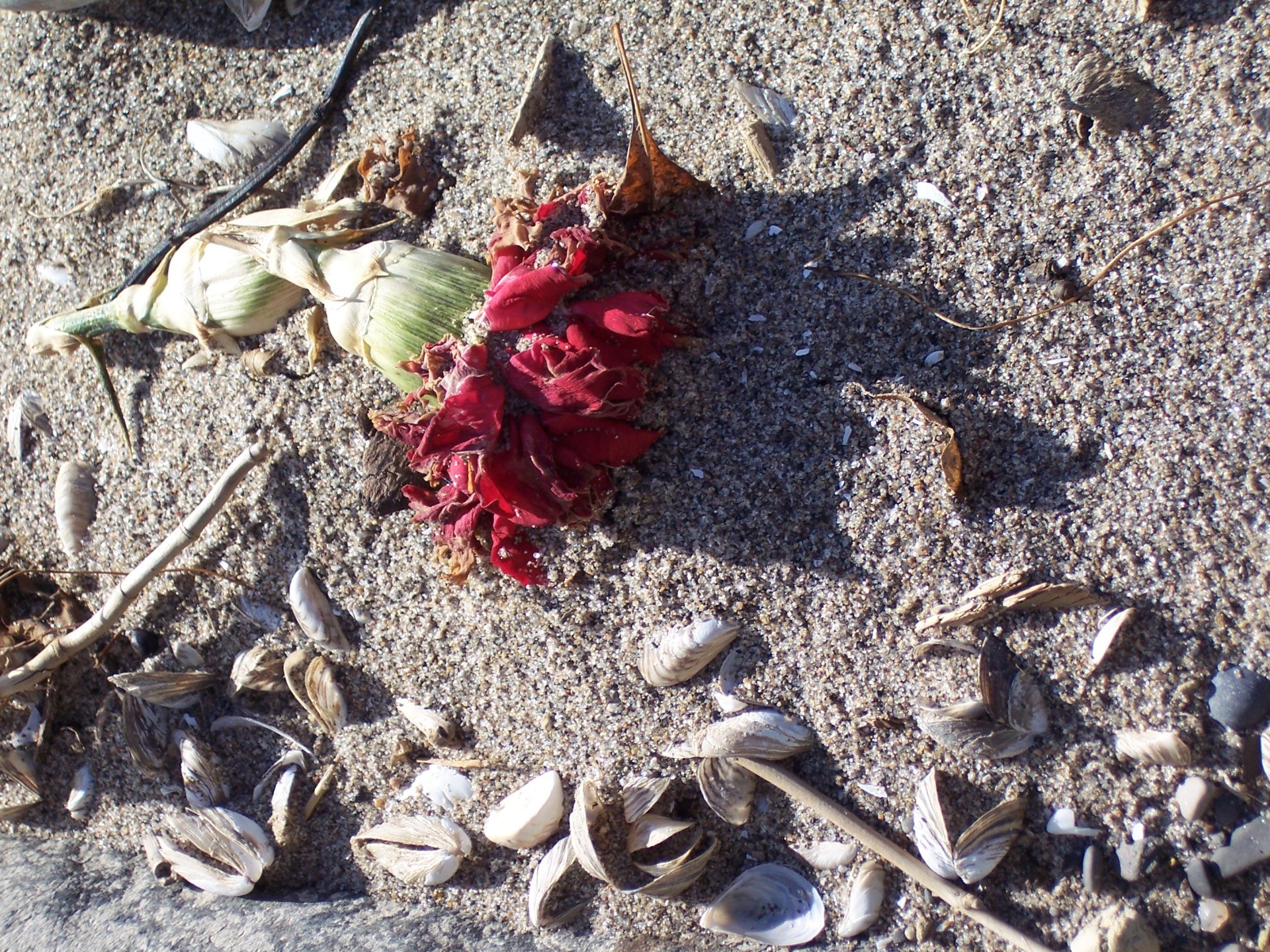
That’s when my ‘Story Ideas’ file comes in handy. In this folder are pictures and articles I’ve cut out of magazines and newspapers. I’ve also included photos I’ve taken. Here’s one of my photos. This is a carnation I found on the beach. As I snapped the picture my brain went everywhere wondering how that carnation came to be on the beach, and more importantly, why was it left at the beach. You bet I wrote a story about it. Yet another story came to me when I read an article in the newspaper that profiled the smallest retail store in the country. What a great setting for a short story.

My story ideas file has helped me with setting, character, as well as character names, titles and opening sentences.

These pictures and articles act as kick starters, but can also lead to the question; And then what? Don’t forget about what follows. Ask yourself what happened the day after. What happened the day after the carnation was left on the beach, the week after, the month after?  There may be a story hidden in the after events.

As most writers do, I carry a notebook everywhere I go. When you see an interesting sign, or overhear a conversation, jot it down. My notebook isn’t very organized, but I’ve known other writers who divide their notebooks into sections—conversations, observations, signs and billboards. Separating where you record your thoughts will make it easier to locate quirky habits and tics to flesh out your characters, or when you’re looking to incorporate interesting turns of phrasing and dialogue.

The internet is a holding ground for millions of stories. While looking  where other writers find their inspirations, I came across a video featuring Jonathan Harris. In this video Jonathan shares how he collects his stories.  Not satisfied with waiting for stories to find him, he’s developed a computer programme called We Feel Fine. The program snatches sentences that include I feel or I am feeling from worldwide blog postings. Each individual sentence is represented by a floating blob that travels across the screen and that the viewer is able to snatch and read. In some cases, you’ll find accompanying photos. A constantly changing virtual treasure trove of story ideas for a bard like me. I can’t tell you how excited I was to find this program. Although the video is several years old, the website is still available. I’ve bookmarked the page and suspect I’ll never run out of story ideas again.

http://www.wefeelfine.org/wefeelfine_pc.html

Stories are everywhere. Establish a story-finding mindset, keep your eyes and ears open and set up a story idea collection to keep your imagination sparked at all times.

http://www.ted.com/talks/jonathan_harris_collects_stories.html

Leave a comment

Filed under Writer's blog, Writer's journey, Writing

Are You Holding The Map Upside Down?

One evening when I was a teenager, my friends and I were travelling to a party. Debbie was driving. After assuring everyone I was a great map reader, I was given the map and the responsibility of delivering our carload of people safely to the party. Map in hand, I confidently spouted out each new turn, and Debbie trustingly followed my instructions. With every turn completed and no houses in sight, it was quickly determined we were not where we were meant to be. Debbie pulled off the road and clicked on the overhead light. Another friend snatched the map from my hands and to my great embarrassment announced I’d been holding the map upside down.

This weekend, I realized I’ve been holding Barb’s (my third POV) roadmap upside down. Barb has a distinctive voice, but I’ve been so caught up wreaking havoc with her life and looking for cheap laughs at her expense, that I haven’t placed her motivation clearly in my mind. To my annoyance, a writing circle colleague has asked me over and over again—what does Barb want? The truth was I didn’t have a ready answer. I wasn’t confident I knew what she wanted.

People have told me they love Barb, but without a clearly defined theme, I’d begun to worry her character wasn’t strong enough to warrant her own POV.

That was three days ago. For all  her fans out there, I’m happy to report; Barb’s POV is safely off the chopping block. I know what this crazy, misfit character wants.

I’ve typed the answer at the top of my chapter and am now guiding Barb’s narrative and each of her choices with this motivation in mind.

Filmmaker, Andrew Stanton (attached video) says—“A major threshold is passed when you mature enough to acknowledge what drives you, and to take the wheel and steer it.”

Thanks to an upright map, I’ve outlined missing scenes that now give Barb the wheel and steer her through what drives her.

In short, you’ll save yourself a lot of time, if you can answer one very important question: What does your character want?

Here’s a video featuring Andrew Stanton where he divulges what he believes to be the key ingredients necessary for good story telling.

http://www.ted.com/talks/andrew_stanton_the_clues_to_a_great_story.html

1 Comment

Filed under Writer's blog, Writer's journey, Writing

I’m Taking My Character Out For Drinks.

My novel-in-progress is told through three rotating, first person POVs. I’m currently editing the front end of the novel and will soon submit the first 75 pages to my one-on-one Continuing Studies instructor for his critiques. In May, I’ll present said 75 pages to the certificate program panel.

Chapter one is in the POV of the matriarch, Anne. Chapter two is in Burt, the eldest son’s POV and in chapter three we hear from Barb, the youngest sibling—an attractive, mid-thirties, narcissist personality.

As I read my early drafts of chapter three, I’m pleased to find Barb’s voice is distinctive. However, after completing the master class in novel-writing, I now recognize I haven’t demonstrated what matters to her as a wife/mother/daughter/sister. The challenge with this character is not in plopping her down in the middle of chaos and letting bad things happen in her life. I love writing a character that does everything I wish I could do.

My responsibility in creating Barb’s character is in keeping her real and relatable. It’s not important that readers like her, but it’s paramount that I infuse enough layers to her character that they care what happens to her.

So how am I going to do this?

I’m going to take Barb out for a few drinks, maybe even get her a bit tipsy, peel back her defences and peer behind her eyes. I going to find out how she ticks and identify her vulnerabilities.

What you need to know about your characters. 

In order to get close to your characters, it’s a great idea to take them out and while you’re out, interview them. Don’t think of this as extra work, but as an opportunity to spend time with your characters outside of the confines of your story. Even if none of the details you uncover are relevant to your story, you need to know them to make your characters real and to convince your reader that they can trust you, that you have a handle on your story and all its players.

Your narrative mustn’t simply fill the reader in on the action. It has to shine a light on your characters, not only through what information they volunteer up, but also the information they offer through their preoccupations and perspectives.

Here are twelve questions you may want to ask your characters during the interview process.

  • Are you a cat person, dog person, parakeet person?
  • What is your earliest childhood memory?
  • What’s your idea of a dream vacation?
  • If you could have any other job, what would it be?
  • Whom do you consider a hero?
  • Which do you prefer: rock, opera, or jazz – and why?
  • What do you carry in your pockets or your purse?
  • Whom would you have voted for in the last election?
  • How would you describe your current circumstances to a close friend, before and then after a few drinks?
  • What would you write about in your journal?
  • What is your worst fear?
  • What are you most proud of?

5 Comments

Filed under Writer's blog, Writer's journey, Writing

Aw, Do I Have To? Seven Strategies to Stay Motivated

I don’t feel I was very productive today.  With the day all but gone, an unpleasant, anxious feeling is riding over me. Although I did manage to write for two hours, the beginning of a short story that’s been niggling away at my brain for the past week, and I did watch an interesting video, Antanas Sileika interviewing Jane Urquhart, I didn’t work on my novel. And now I’m feeling guilty.

Since committing myself full-time to writing, I find I’m not always getting as much done as I would like. I’ve heard other writers say that having more time to write, doesn’t always translate into writing more of the time.

So the big question is how do I stay motivated?

Here are seven tricks I’ve come up with to keep myself writing. They really do work—if I let them.

Copy Cat

As Tony Robbins suggests; identify people who are doing what you want to be doing and copy them. Why reinvent the wheel? I’m fortunate to have a number of people in my circle of writing friends who produce magnificent writing on a consistent basis. These successful writers are living proof that it is doable. So I watch, ask questions and attempt to copy them.

Fill the Well

Julia Cameron is a great believer that in order to consistently produce quality art, we have to ensure that we don’t allow our creative well to dry up. For me, I know that when things just aren’t coming, it’s time to grab my camera and spend a few hours taking pictures. When I focus my attention on a caterpillar eating through a leaf, or a single red berry hanging off a bare tree branch (each could be symbols of my writing), I’m filling my well.

Mix it Up

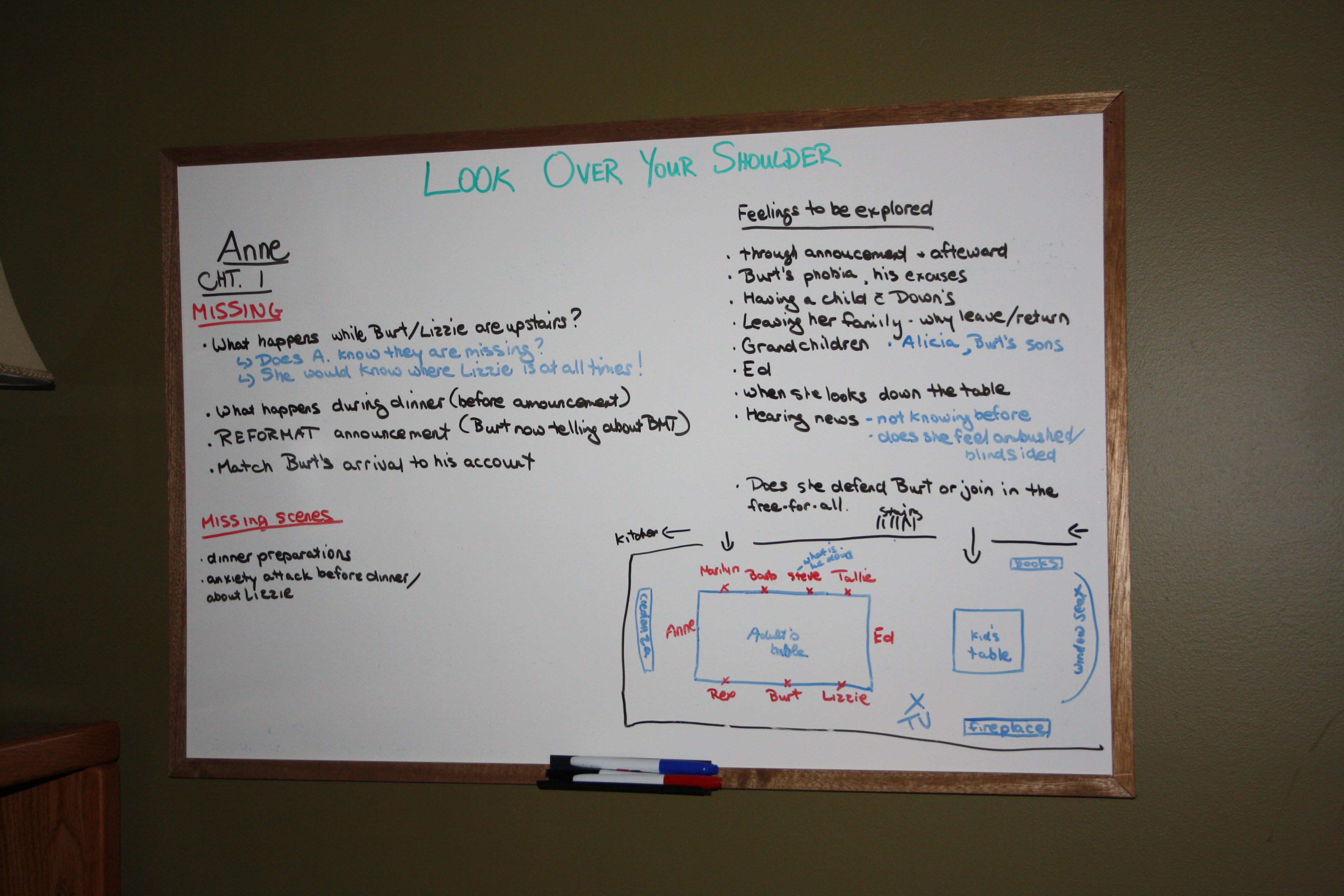
I’ve discovered that by mapping out each chapter as I arrived at it, I’m better able to see what is working and what is missing. I post missing scenes, character and plot points on a whiteboard (more about the wonder of whiteboards in a future blog). Now, when I arrive at my office each morning, I can pick and choose which scene I want to work on. Andrew Pyper has said he uses a similar plan of attack and suggests some days you just want to write the sex scene—so go for it. I give myself permission to write the scene I feel most moved to write (sex scene days are always fun days).

Walk it Off

Nothing beats getting away from my desk and taking a half hour walk. Before I lace up, I read the section I’m working on, drop a notepad and pencil in my pocket and invite my characters along. Each time I do this exercise, I’m amazed how putting myself and my characters in motion brings clarity and energy to my writing.

Road Trip

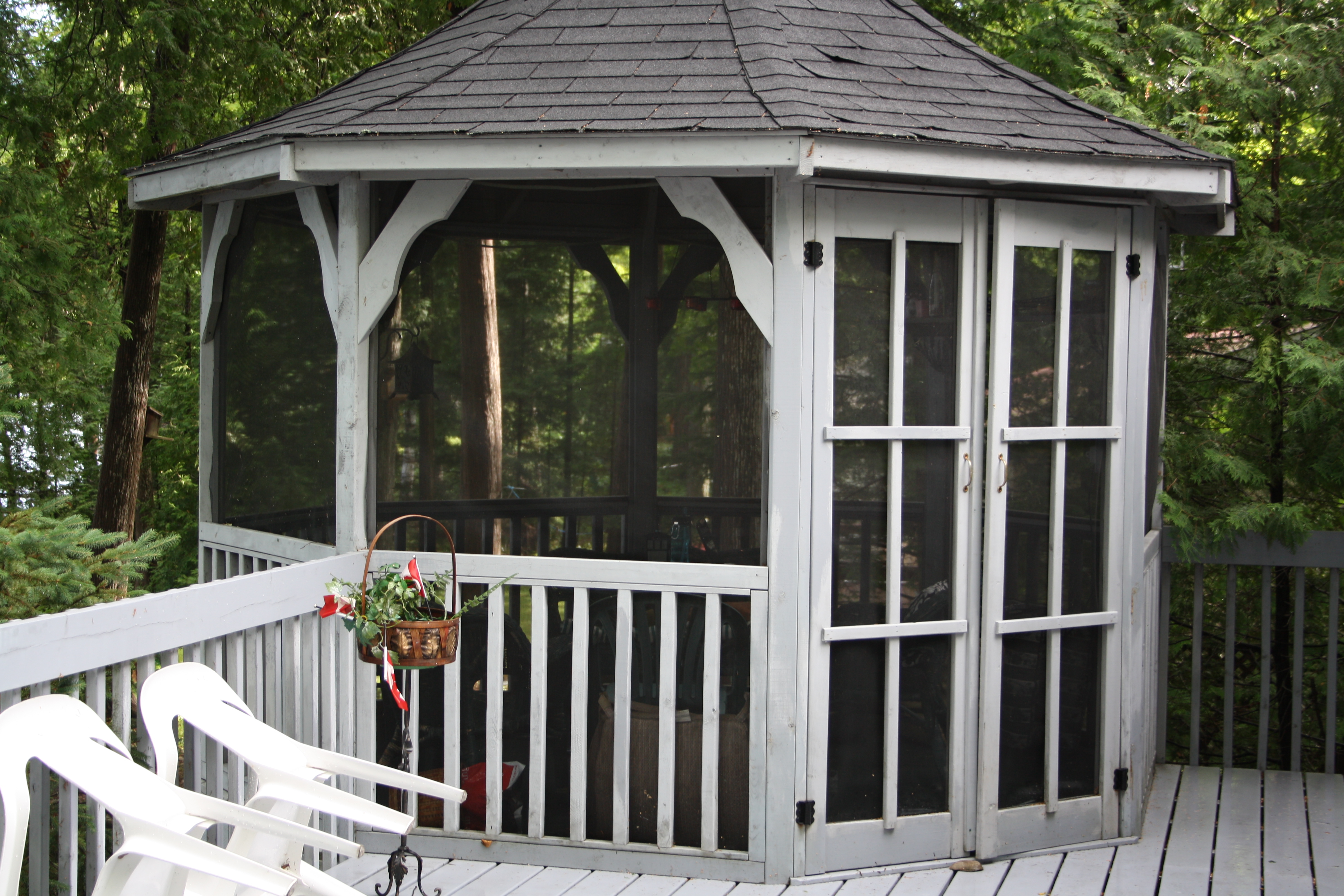
It gets pretty boring staring at the same four walls every day, so I pack up my laptop and go to a coffee shop, or a park for a few hours. In the nice weather, I write in my gazebo. Writing outside reminds me of when we were kids and the teacher would take the class outside and teach the lesson on the school lawn. I never feel I’m missing out when I can raise my eyes and see an overflowing flower box.

Trick or Treat

Bribery works. On mornings when I feel like stomping my feet and singing the ‘I don’t wanna do this’ song, I imagine a treat I’ll reward myself with at the other end of X hours of writing. In the past, I’ve used the promise of a trip to the bookstore, or an ice cappuccino if I keep my butt in the chair and my fingers flying across the keyboard. Of course, there’s no room for cheating. No work, no treat.

I See

Every morning before I type a word, I meditate. If prayer is speaking to God (or the universe if you prefer), then meditation is listening to God. I’m always blown away by what spontaneously pops into my head when I become still. I also practice visualization throughout my day, imaging my book on the bookstore shelf (I’ll be a few titles down from Michael Ondaatje), who I’ll invite to my book launch (be nice to me or you’re off the list), and I image readers, my readers, waiting excitedly for the release of my next book.

And then there are those days where I’m too lazy to even consider my list, so I schedule in a ‘not in the mood day’. Because let’s face it, some days you just need to clean the damn house!

11 Comments

Filed under Writer's blog, Writer's journey, Writing

Writing Tricked Me!

Have you ever started a story only to find several hundred words in that it has nothing to do with what you thought you were going to write?

While surfing the internet, I came across an interview with Amy Tan, (I’ve attached the video to this post) where she discusses, among other things, the notion that through writing we discover things we otherwise could not express.

I’d agree with Ms. Tan that the craft of writing has a way of tricking you into thinking about things you hadn’t thought about before and that very often we are driven to write a story during periods of great change. In fact, it’s the change that forces questions to the top and that pushes the story to be told.

The catalysis, the change that inspired me to begin my novel was the death of a dear friend, who after years of battling leukemia, received a bone marrow transplant, only to have her body reject the donor marrow and eventually to lose her battle in September ‘03. I thought I wanted to write a story that would bring attention to the need for bone marrow donors and to reflect the courage I saw in my friend. Heidi was an only child with an uncommon pedigree (her parents are German and South African) and without a match in either extended family, she had to rely on a stranger donation. That’s what I thought I wanted to write.

You tricky trickster Ms. Writing!

As it turns out, what I really wanted to write was about a family with several siblings (not an only child) as they came to grips with the life-threatening illness of one of their own, and to watch how they pulled together (or not), pushing aside old hurts (or not) to support each other.

70,000 words in, I’ve discovered I’m writing a story about the relationship between parents and their children, and between siblings. I’m also exploring how easily we misunderstand the people closest to us, and how the people we’ve spent our entire lives with, the people who should know us better than anyone else, are often the people who don’t see us (the real us) at all.

Where did that come from?

As I’ve said in an earlier blog, my fictional family is not my real family, but as I write I do recognize themes present in the Sargent/Murchison/McRobb/Overend clans. Being the only family I know from the inside out, I guess it stands to reason issues (oh we have issues) that my family live with would show up on my laptop screen.

Even more surprising to me as I dig deeper into my characters, is how my attention has focused on the mother/son relationship. Although the mother/daughter relationship is present in my novel, the primary pairing driving my narrative is between Anne (the matriarch) and Burt (her eldest son).

Didn’t see that coming.

Ms. Tan suggests that we do all in fact have a story in us, a story that only we can tell, a story that reflects our unique way of looking at the world that is different from anyone else’s viewpoint.

So I’m not telling Heidi’s story? Interesting.

Now, I hope I’ve had all the surprises that trickster has up her sleeve so I can actually get this novel finished!

5 Comments

Filed under Writer's blog, Writer's journey, Writing

5 Tips for Self-Editing

Are you staring at your prose, aware it could be better, but with no idea how to fix it? Been there, done that.

My task this past weekend was to line edit the first twenty-five pages of my novel-in-progress and I’ll admit it damn near killed me. Although I had already edited my work for plot and character development (the big picture stuff) and felt the writing was all right, I needed to elevate the chapter from all right to amazing. The time had arrived to get out the magnifying glass and zoom in on the small picture stuff.

Here are five tips for self-editing that I’ve put together (with help from the trillion workshops I’ve attended and the billion internet articles I’ve read).

Personally, I like to give my entire manuscript an individual sweep for each point.

Step To It

Whether your inclination is toward writing long pack-everything-in kind of sentences or trimmed-to-the-bone sentences, my advice to you is mix it up. Remember, too much of a good thing isn’t good for you. Like eating hot chili pepper Doritos everyday isn’t good for you, neither is a steady diet of the same sentence structures.

Your sentence lengths should also match the mood you’re attempting to create. Ask yourself, am I writing a lazy-day-at-the-park scene, or run-the-cops-are-coming scene? Lazy days dictate more drawn out prose while chase scenes need urgency. It seems obvious, right?

Was that really necessary?

Do you want your reader to trust you? Then say what you mean and mean what you say!

Is your protagonist waiting on her tardy husband for several minutes, or forty-five minutes? Knowing the dirty rotten scoundrel has left her standing in the rain for forty-five minutes, has more impact than believing it was more than a few, but less than many minutes.

Don’t feed your reader wishy-washy words like very, really, somewhat, likely, just, quite.

Unnecessary and vague words suck the life out of your prose. Stay away from spineless words that slow the reader down and piss them off. Annoyed readers aren’t going to read your story.

Enough with the Adverbs and Adjectives already!

My personal pet peeve!

Adverbs and adjectives are like nice people, but not people you want sitting at your kitchen table morning, noon and night.

As a rule, adverbs prop up weak verbs and are seldom needed. You can eliminate them by using stronger verbs.

Rick ran quickly from the room.

Rick charged from the room.

Adjectives remind me of my husband who has never trusted a recipe in his life and who feels he has to add this and this and this to the pot. Although I appreciate his creativity, his constant inclusion of Mrs. Dash is unnecessary, and dare I say, distracting.

The bright, yellow, ray of warm light filled the room.

Sunlight filled the room.

Say it Again!

It’s easy to do. You come up with a brilliant word or awe-inspiring phrase, and like a catchy jingle, before you know it’s stuck in your head, repeating over and over again on the page. This is where printing your work and reading it out loud will pop up those accidental brain blips.

Not To Be!

This is a biggy and my personal favourite vise.

Watch out for overuse of the verb “To-Be” (am, is, are, was, were, be, being, been). This weekend when I did a Find search of my twenty-five page chapter, I found eighty-nine, 89, WASs in my prose. Yikes! Time to seek out and destroy!

Overuse of the verb “To-Be” creates a passive sentence structure which in turn creates confusing, awkward, wordy sentences. You want your sentences to be active, not passive. Trust me.

Active voice = the subject performs the action. The grocery cart hit the car.

Passive voice = the subject receives the action. The car was hit by the grocery cart.

Here are three strategies to help you eliminate the “To-Be” verb.

  • Replace the verb with a stronger verb.

That chocolate cake is good. (passive)

That chocolate tastes good. (active)

  • Rearrange the words in your sentence.

The phone was answered by Nicole. (passive)

Nicole answered the phone. (active)

  • Change another word in the sentence into a verb.

Mike was the creator of the music. (passive)

Mike created the music. (active)

Whatever form your writing takes, I hope these simple principles help you better navigate the scary waters of self-editing.

5 Comments

Filed under Writer's blog, Writer's journey, Writing

It Takes a Village to Raise a Writer

Cottage Office

Last fall, I thought I should quit being a writer. It wasn’t that I didn’t want to write anymore, it was that I thought I couldn’t write well enough. I worried I was like the American Idol contestant who thought they were the next Celine only to be told they were delusional and shouldn’t quit their day job.

Trouble was, I had quit my day job.

This past June 30th I began my ‘break’ from a pay cheque and on July 1st arrived at my mom’s cottage with my laptop, thesaurus (I’ll use the internet version, but nothing beats my dog-eared Gage Canadian Thesaurus), a bullet point goals, strategies and writing schedule and, dare I say it—okay I’ll say it—a suitcase of dreams. As luck would have it, the cottage was empty for one glorious week. I set myself up in the screened in gazebo, dialed in CBC Classical and I wrote, most of it pretty good, I thought. When the week was over, I returned home to my home office. As the summer weeks fell away, I continued to write and by the end of the summer, I’d edited 45,166 words—150 pages, of my original 70,000 word first draft. Not bad, I thought again. To keep myself on schedule, I’d arranged to submit twenty pages to my first reader, and either over peppermint tea at one of our houses, or via Skype we worked through the fruits of our labours. (Off for most of the summer, she worked as hard to submit her own twenty pages to me.)

In September, my bi-weekly writing circle resumed and I began another U of T creative writing course, Novel Writing Master Class. Confidently, I emailed out the first instalments of my new and improved chapters. Between both groups, fifteen fellow writers, the word came down—it sucked.

No hyperbole, I was DEVASTATED, CRUSHED, a snivelling, whimpering puddle of pathetic, worthless doggie dodo.

Never before had I worked so hard and never before had my writing received such harsh critiques. How could this be? How could I have gotten it so wrong? I’d quit my job for GD sake. You know what they say; when you hit rock bottom, there’s nowhere to go but up. But like the Tin Man, my joints had rusted with all the ugly-cry tears I’d split. I needed help getting up.

Lucky for me, my village rallied around—more than one carrying a sharp stick happily used to poke me with. Some of the very people who were (politely) telling me they weren’t feeling a connection to my characters and didn’t care to turn the page, in other words that my novel sucked, were the very people who sent me private emails, called me on the phone, offered to look at my re-writes before scheduled submission and took me out for tea.

Who were these good Samaritans? They were my tribe, my peeps and most of them, the really good ones, had all been where I now found myself, in the pit of despair. Without fully realizing what I’d managed to do, I discovered that over my early writing years I’d built a strong foundation of tribe members who genuinely cared about me and about my work. Equally important, I’d also managed to leave behind a trail of wet blankets, those naysayers who didn’t value my artist view of life.

Wow, I began to think. I really am clever. If all these wonderful writers (and close, supportive non-writing family and friends) thought I could fix my work, then I owed it to them to pull myself together.

This was fixable. It was doable. I’m woman writer, hear me roar.

Not so fast Sparky.

The hard work was yet to come. Since my breakdown, I’ve spent vast amounts of time, sitting at this chair (most of it writing, although I’m pretty wicked at spider solitaire). Some days I’ve had to have harsh conversations with myself and other days recognized I needed to pull out my gentle grandma voice (okay, I’m a young grandma, by Grammy I am). As we speak, I’m now preparing seventy-five pages to submit to my one-on-one instructor and ultimately to the Continuing Studies panel who will deem whether my work, whether I am, certificate worthy. I now feel confident that I am.

To those of you who are at the early stages of your writing careers, I strongly urge you to join a writing circle, go to conferences, take courses, network and build your own tribe. Step out of your writing space and introduce yourself to your village. Because if you are serious about becoming a writer, you will eventually have a dark-night-of-soul somewhere along your journey and you’re going to need your village.

A special thanks to my tribe, but please don’t shut off your phones. I’m up for submission soon and I might be calling!

If you live within driving distance of Durham region, have a look at what the WCDR has to offer new and not so new writers.

www.youtube.com

11 Comments

Filed under Writer's blog, Writer's journey, Writing

A Dragoness Made Me Cry

Yesterday, I made the trek into CBC Toronto to watch the Canada Reads final debates. (Yup, that sure is me right behind Jian Ghomeshi’s shoulder.) Although this year’s debate has not been without controversy, specifically the incendiary comments made by Anne-France Goldwater, I am so glad I made the trip into town to catch the debate live.

I’ve never been a very political person. I know little about Iranian or Chilean politics so am completely unqualified to comment on what Ms Goldwater said about Prisoner of Tehran or Something Fierce. However, I do agree with the panelist, Shad, (who is this amazing guy?) that if the debate had been shutdown, the message would be sent to Canadians that it isn’t okay to disagree or to voice certain opinions in this country.

The most moving moment of the week for me came in the final few minutes of the Q & A section of yesterday’s debate when Arlene Dickson, star of Dragon’s Den, spoke about why Canadians ought to read books.

“People who haven’t read and aren’t considering picking up a book again because they live in that short text world, need to understand that when they get up in Canada, that they are living in the best country of the world, and that we stand on the shoulders of giants. And that’s why we live in the best country in the world. And the giants are the people who are willing to put themselves out there and share with us the journeys they’ve been on so that we can become better as a nation. To me that’s what Canada is about. We are about listening and understanding and learning as a multi-cultural unit and taking the voices of the individual and making it into something amazing. So read books. It is so important.”

Arlene’s passion brought me to tears.

The experience of being in a studio for a live taping was fun, but what I take away from this past week and indeed, the weeks leading up to the debates, is that books matter and I’ve been reminded of the power of the written word. Fellow writers, it can’t be overstated; as storytellers we have a responsibility to tell stories, stories that shine mirrors back at ourselves and our world, stories that move and motivate and resonate.  Books are relevant.

Write On!

Each of the four debates, Q & A sessions, and panelist confessionals can be found at the Canada Reads website. Whether you agree with what the panelist say, I promise they will make you think.

3 Comments

Filed under Writer's blog, Writer's journey, Writing

Be Careful What You Say, I’m Writing a Book.

Recently after reading at an open mic in Newmarket, two teenage girls approached me to ask about my writing and specifically the story, For Sale, I had just read. Before leaving, one girl asked whether the story was real and had actually happened. Although I had anticipated someday being asked this question, I still stammered through, “No, it’s completely fictitious.” Which is the truth—all except for the completely part.

Not one scene in this story ever happened, but what was true was a feeling of loss I was experiencing at the time. Strong emotions and feelings are my inspiration, my jumping off place, not actual people I know, or actual events I’ve witnessed. So it was pretty cool when Terry Fallis (a judge in the Random House Student Award) said in his comments about For Sale: “I felt the tension, the anticipation, and the daring wrapped up in her words. Then I felt the sudden sense of loss, just as Sharon Overend had intended.”

Nope, it doesn’t get cooler than when a reader actually gets IT.

I suspect every fiction writer comes up against the did-this-really-happen question at some point. After all, the work comes through us, so it seems a natural question to ask. The people close to us are bound to believe they recognize themselves, or their life situations, in our work. I don’t know how to get around it. I’m a writer and as a writer, I’m an observer. My characters rise out of the many rich, interesting people around me, but are not portraits. They are caricatures, often an amalgamation of several people.

Before you ask dear family and friends; you are not in my novel—mostly.

My story centres on a Roman Catholic, Irish Canadian family living off the Danforth in Toronto from the 60’s onward. It’s true my teenage years were spent living one block north of the Danforth and at the time I was attending a Catholic, all girls’ school downtown, and I do come from a large family, but let the record reflect; I’m only ¼ Irish Canadian and I only lived off the Danforth for five years.

Although, I may have used some family members as character archetypes, it’s important to stress this family is not my family. The similarities of place and character were reference points for me and not meant to draw comparisons to my own life. It’s a work of fiction.

Having our family and friends recognize themselves in our writing is a real danger and if left unchecked can also be the source of writer’s block. Too many good writers have been stopped in their tracks worrying what their loved ones will think. Quit it!  It takes a lot of courage to write and maybe for our families to read our writing, but we have to tell our stories with the characters who are speaking to us, warts and all.

Writers, proceed with caution, but please, do proceed!

What do the pros say on this subject? I’ve read several interviews and most authors admit to having grounded some of their characters in personalities they’ve know. Others say no they haven’t.

Not only do I base my characters on people I know, I use people’s names. In Standing in the Rainbow, Can’t Wait to Get to Heaven and Welcome to the World, Baby Girl!, there’s this couple, Norma and Macky Warren. Those two people are based on my best friends who live in Birmingham. After I wrote the book, I called Norma and said, “Honey, I’ve got these two characters. Help me think of some great names to call them.” There was this silence and she said, “Well, you may as well call them Macky and Norma because everyone’s gonna know who we are anyhow.” So I said, “OK!” Well, Norma has become a local celebrity. She goes out and signs books, does speeches, and is having a wonderful time! – Fannie Flagg – Fried Green Tomatoes at the Whistle Stop Cafe

Not at all.  The plots are not my life, those characters are not people I know, and none of them is me.  My job, as I understand it, is to invent lives that are far more enlightening than my own, invested with special meaning.  That’s the whole advantage of fiction over life: you get to control the outcome…

I populate my setting with characters who will serve my plot.  Those characters are my slaves.  They must do exactly what I want, or the story falls to pieces.  No actual person I know is that cooperative.  So I invent people from scratch, starting with what they need to do, and working backwards, inventing life histories that render their actions believable.

Pure invention seems straightforward to me, much easier than trying to jam an already formed personality into a mold it won’t fit. – Barbara Kingsolver

And here’s what Jonathan Franzen had to say.

7 Comments

Filed under Writer's blog, Writer's journey, Writing

I Walked Into a Cow Once!

True story. I was at the cottage, probably fifteen or sixteen-years-old, walking the gravel road to our country store, my face buried in a book. I’m sure bringing said book on a solitary three-quarter of a mile walk was my attempt at stealing a few moments of quiet from the usual cottage related shenanigans that were a constant at the McRobb Mob Inn.

Next door to the store was a century old farmhouse that had seen no home improvements since the original carpenters tucked their tool belts away –the floors were still dirt and there was no indoor plumbing. The farmer, Old Camack (his family name was Camack and he was extremely old) kept his one cow leashed to a fence post at the end of his driveway.

Bet you know where this is going.

Have you ever tried walking with your eyes closed? If so, you’ll know that it’s almost impossible to walk a straight line. Well, I can assure you walking with your nose buried in a book amounts to exactly the same thing. I can only imagine what that cow must have been thinking as she watched a skinny girl with a paper foldie thing clutched in her hands aiming straight for her. Bidding her time, that crafty old cow waited for our noses to almost touch before she let out a moo that sent me skyward. Once I recovered, I do seem to remember a hint of a smile curling around her lips.

I loved reading books then and l love reading books now! Reading brought me to writing. I know, I’m preaching to the choir, but it bears repeating; writers you have to READ. Okay I’ll get off my soapbox. You writers get it, right?

I’m a firm believer that you can tell a lot about a person by how they keep their personal space? (No you can’t come over to my house.) On a recent visit to a writer friend’s home, I was thrilled to see every inch of wall space in her sitting room was covered with bookshelves. Now that’s a writer for you. My house looks the same, except I could add; every flat surface in my bedroom and office is also covered with books.

Currently, I’m working my way through the 2012 Canada Reads shortlisted books. The Game – Ken Dryden, On the Cold Road – Dave Bidini, Prisoner of Tehran – Marina Nemat, Something Fierce – Carmen Acquire, The Tiger – John Vaillant. Although I’m only on the third of five, I highly recommend Prisoner of Tehran, but be warned—you won’t come out the other side the same person you went in. It’s a life changer!

I’m always looking for new books to read so let me know your current favourites and I’ll tell you mine.

I’ve attached a short video wherein Ian McEwan discusses showing up at your desk to write and schedule reading into your day.

http://www.youtube.com/watch?v=q0ZEE9_iZRk

6 Comments

Filed under Writer's blog, Writer's journey, Writing