
Tag Archives: Story ideas

The Moment That Started It All

Why did I write Look Over Your Shoulder? And more specifically—why this story?

Simple. Grief made me do it.

Twenty-two years ago, I lost a dear friend to leukemia. Heidi was an only child with rare lineage, which made finding a bone marrow donor within her extended family nearly impossible. At the time, she had a 13-year-old daughter and every reason to fight. So, she pulled on the boxing gloves and jumped in the ring. An international search began, and eventually, a match was found—an anonymous donor willing to give her a chance.

Then Toronto was gripped by the SARS pandemic.

Today, we understand what a pandemic means to society. But in 2003, our understanding was vague. Quarantines were strict. Visitors weren’t allowed in hospitals. After her transplant, Heidi was isolated—cut off from the very people she needed most. She and her family launched a fierce campaign to change the hospital’s no-visitors policy. She contacted local media. She made noise. And she won.

But despite all of it, just weeks after the transplant, Heidi lost her battle.

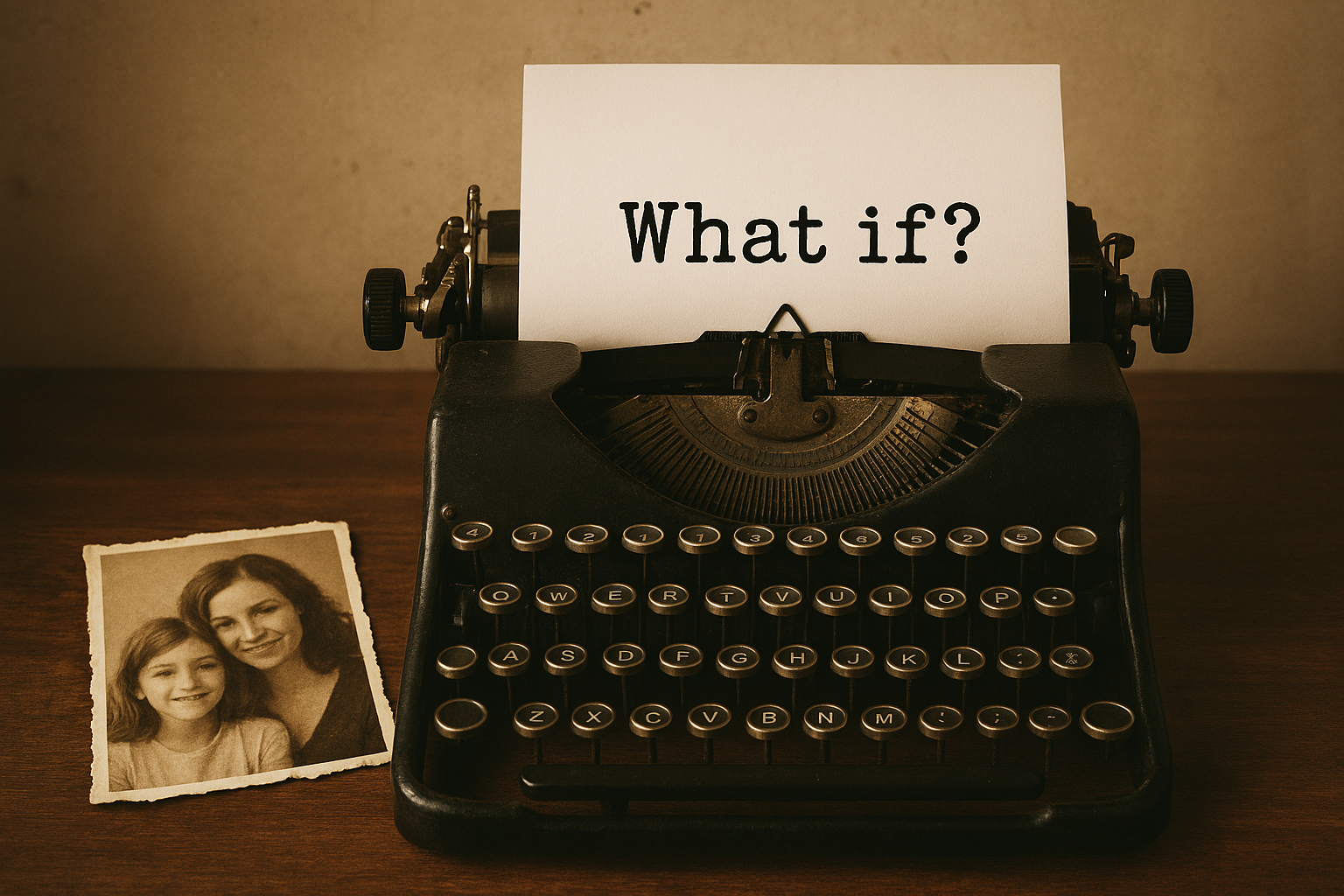
Once I moved through the early stages of grief, the “what ifs” began to loop. What if she’d found a donor within her family? What if she’d received treatment earlier? What if the system had bent sooner?

Lucky me—I have a built-in grief buster: writing.

To explain my loss and make peace with those looping questions, I began a new story. In it, I asked: what if a leukemia patient did find a donor within their immediate family? But unlike Heidi’s donor—who never knew their generous gift hadn’t saved her—this donor had to watch as their loved one’s body rejected the transplant. And what if that donor was the one person in the family least equipped to handle either the procedure or the decline?

And so, Look Over Your Shoulder began.

My wheelhouse is character. And this book is full of them. Through writing this story, I didn’t just learn how to shape a novel—I learned how different people carry grief. How they bury it. How they wear it. How they survive it.

Look Over Your Shoulder started from loss. But quickly became something more: a way to understand love, legacy, and the fragile threads that bind us.

💥 You can pre-order your Look Over Your Shoulder e-book now and take advantage of this introductory price: https://books2read.com/u/bzGr7z
💥 Print version will be available for sale on October 21, 2025.

Leave a comment

Filed under Writing

Stories In Old Attics

I was the kind of kid who happily sat with my grandmothers (both born in 1913) as they spun  tales of life growing up in Toronto in the twenties, surviving the Great Depression and World War II, becoming newlyweds in the thirties and young mothers in the forties.

With one Irish-Canadian grandmother and one French-Canadian grandmother, I learned my bard skills. I’m so grateful that both women lived into their mid-eighties and by the time they passed, we had clocked hundreds of storytelling hours together. (My first novel, safely stored in the bottom drawer of my desk and sadly not likely to see the light of day, was set in early twentieth century Toronto and loosely based on one grandmother’s life.)

Unfortunately, I know less about my grandfathers and their lives. Although my paternal grandmother was able to tell me where my Canadian born grandfather had lived as a child, his passing at age forty-eight meant I would never hear him tell about servicing in the Canadian Air Force during WWII or anecdotes from his life that only he would know.

My Scottish grandfather was killed in a work-related accident when I was eleven and at the time of his death, he had just begun to see me as a person rather than another noisy kid. One of my last memories of him was of sitting on the front porch and listening as he told me how he left his family’s Highland farm at the age of sixteen in search of a new adventure and of his plans to farm in Saskatchewan, Canada. As luck would have it, his arrival in Saskatchewan coincided with the harsh and unrelenting draught of the Great Depression and his new farmland refused to yield a decent crop. He died before he shared with me why he hadn’t simply packed up and returned to Scotland, but instead found his way back east to Toronto.

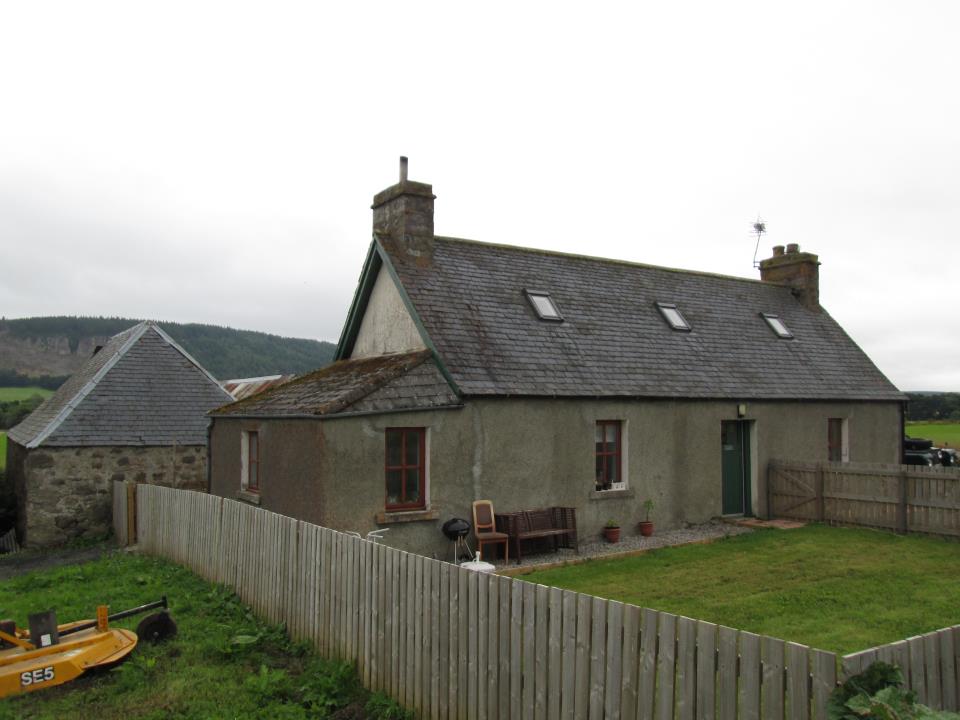
After his death, and knowing how we had begun to connect through his stories of the old country, my grandmother took me and my oldest cousin to visit his birthplace; Muir of Ord, Rosshire, Scotland. Every fibre of the romantic storyteller in me tingled the moment I clapped eyes on the centuries old farmhouse where generations of my family had lived, worked and died.

If only those walls could talk!

What foods did my great-grandmothers prepare in their kitchens? How many children were born in the upstairs rooms with the sloped ceilings? What thoughts ran through the men’s minds as they peered out those small windows cut into the roof? What conversations were had around the fireplaces? What good times and what bad times were played out behind the front door? Why had Grandpa left?

This past week, my sister made the pilgrimage to Muir of Ord and shared this picture of the Murchison farmhouse. Tonight, I find myself staring at the photo and am bombarded with the flood of a thousand stories waiting to be told using this farm as my setting.

I’ve asked before, where do you find stories ideas? Lately, I’m finding many of my ideas are coming from settings that pop out at me.

Has a real setting ever offered you a story idea? Do share.

4 Comments

Filed under Writer's blog, Writer's journey, writing,

Where Do You Find Stories?

So suppose you’ve run out of crazy people in your life to draw inspiration for your stories. Where would you look? I’m one of the those fortunate people who has an abundance of crazy around me, and rarely do I have to search out story ideas, but occasionally, when I want to look outside my suburban, middle-class, Canadian life to offer a twist either in character or setting, I’ve hit a roadblock and felt lost for new inspiration.

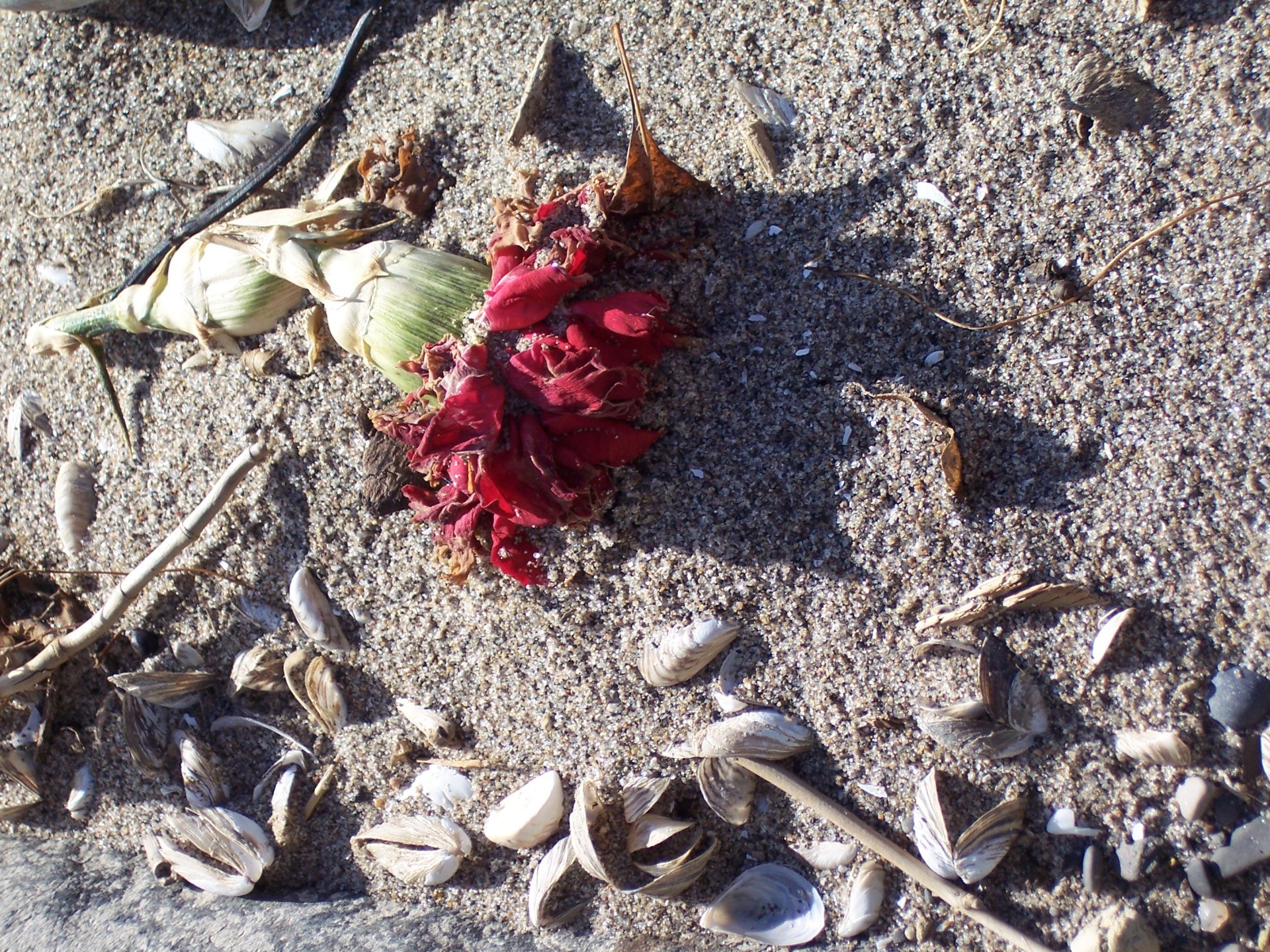
That’s when my ‘Story Ideas’ file comes in handy. In this folder are pictures and articles I’ve cut out of magazines and newspapers. I’ve also included photos I’ve taken. Here’s one of my photos. This is a carnation I found on the beach. As I snapped the picture my brain went everywhere wondering how that carnation came to be on the beach, and more importantly, why was it left at the beach. You bet I wrote a story about it. Yet another story came to me when I read an article in the newspaper that profiled the smallest retail store in the country. What a great setting for a short story.

My story ideas file has helped me with setting, character, as well as character names, titles and opening sentences.

These pictures and articles act as kick starters, but can also lead to the question; And then what? Don’t forget about what follows. Ask yourself what happened the day after. What happened the day after the carnation was left on the beach, the week after, the month after?  There may be a story hidden in the after events.

As most writers do, I carry a notebook everywhere I go. When you see an interesting sign, or overhear a conversation, jot it down. My notebook isn’t very organized, but I’ve known other writers who divide their notebooks into sections—conversations, observations, signs and billboards. Separating where you record your thoughts will make it easier to locate quirky habits and tics to flesh out your characters, or when you’re looking to incorporate interesting turns of phrasing and dialogue.

The internet is a holding ground for millions of stories. While looking  where other writers find their inspirations, I came across a video featuring Jonathan Harris. In this video Jonathan shares how he collects his stories.  Not satisfied with waiting for stories to find him, he’s developed a computer programme called We Feel Fine. The program snatches sentences that include I feel or I am feeling from worldwide blog postings. Each individual sentence is represented by a floating blob that travels across the screen and that the viewer is able to snatch and read. In some cases, you’ll find accompanying photos. A constantly changing virtual treasure trove of story ideas for a bard like me. I can’t tell you how excited I was to find this program. Although the video is several years old, the website is still available. I’ve bookmarked the page and suspect I’ll never run out of story ideas again.

http://www.wefeelfine.org/wefeelfine_pc.html

Stories are everywhere. Establish a story-finding mindset, keep your eyes and ears open and set up a story idea collection to keep your imagination sparked at all times.

http://www.ted.com/talks/jonathan_harris_collects_stories.html

Leave a comment

Filed under Writer's blog, Writer's journey, Writing